
AI Governance: A Working Guide for Mid-Market and PE-Backed Companies
AI is already embedded in enterprise workflows. Governance is what determines whether the business can scale it, the regulator can accept it, and the next buyer can rely on it.

Jul 2, 2026
AI governance is the set of policies, processes, and accountability structures that determine how an organization develops, deploys, monitors, and decommissions AI systems across its operations. It defines who is accountable when a model decides, how risk and impact get measured, and what happens when a system behaves outside what it was designed to do.
Most companies did not adopt AI in the coordinated way governance frameworks assume. The Stanford HAI 2026 AI Index Report finds that 88% of organizations already use AI in at least one business function, and generative AI reached 53% population-level adoption in three years, faster than the personal computer or the internet. That speed came ahead of the practices that make AI reliable at scale: over the same period, documented AI incidents nearly doubled and the average score on the Foundation Model Transparency Index declined. The result is that most organizations cannot fully explain what their AI systems are doing in production, or account for how those systems are shaping decisions inside the business.
Why AI governance has become an operating priority
For many organizations, the real governance risk is an operational blind spot: AI is already shaping workflows, decisions, customer interactions, and internal processes before the business has a clear view of where it is being used, who owns it, and how its impact is being controlled.
That blind spot is becoming harder to ignore for four reasons:
- Adoption is moving ahead of oversight: Some functions run controlled pilots while others run AI tools no one is tracking. Without a shared inventory of what is in use and where, the business cannot have a single governance conversation across the organization.
- The models themselves are harder to inspect: Many of the leading foundation models are released without published training code, according to the same Stanford HAI report. For companies using those models, governance cannot depend only on understanding how the model was built. It also has to define how the model is used inside the business, which is where the operational functions covered below take over.
- New governance obligations are becoming enforceable: Governance requirements under the EU AI Act are already in force, federal guidance in the U.S. is available, and several dozen countries have active AI legislation in various stages of development. For most companies, the practical challenge is understanding which rules apply to each AI system, based on where it is used, what kind of decision it supports, and what level of risk it creates.
- The governance conversation is moving up in the org chart: according to MIT Sloan Management Review, traditional playbooks are not keeping pace with AI. Titles have proliferated (many companies now name a Chief AI Officer), but in most organizations the practical work of governing still lacks a person with real authority to say no.
The NIST AI Risk Management Framework as the working spine of enterprise AI governance
For companies, the NIST AI Risk Management Framework is the operational spine of most AI governance work. Two other frameworks come into play depending on the business, and we cover both at the end of this section. NIST AI RMF is what most enterprise programs organize themselves around, and there are three reasons for it.
- The framework is voluntary, so organizations can adopt it at the pace and depth that fits without triggering a full compliance program on day one.
- Its structure is sector-agnostic, which means a healthcare platform, a fintech, and a manufacturing portfolio company can all get value from the same reference without translation.
- It aligns with the NIST Cybersecurity and Privacy frameworks that most U.S. enterprises already run, so risk, security, and compliance teams recognize the shape of it immediately.
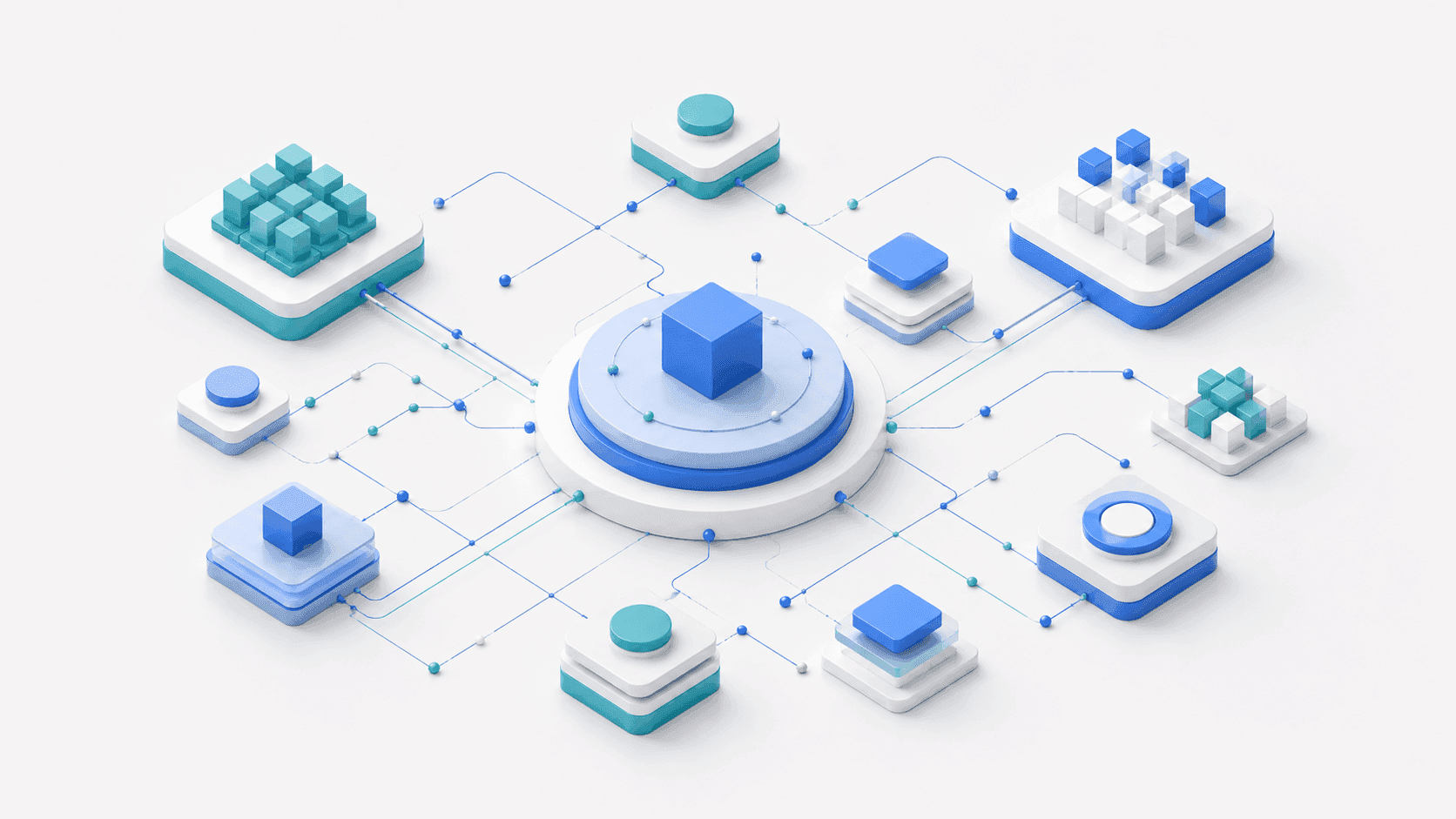
The framework is built on two layers that work together but describe different things: the seven characteristics of trustworthy AI define the qualities an AI system should have, while the four core functions define the organizational work required to achieve and sustain those qualities.
In practical terms, the characteristics describe the target state, and the functions describe the operating model that gets the organization there. A governance program only works when both layers stay connected: the characteristics give the program its standard, and the functions turn that standard into ownership, controls, monitoring, and decisions over time.
The seven characteristics of trustworthy AI
These seven characteristics define the qualities an AI system should hold to be considered responsibly deployed and they’re the target state a governance program is trying to produce:
- Valid and reliable. The system does what it is supposed to do, consistently, across the conditions in which it operates. Validation and reliability testing are what make this measurable.
- Safe. The system operates without causing harm to people, property, or the environment, including under conditions that were not part of its original design.
- Secure and resilient. The system withstands adversarial use, unexpected inputs, and operational disruptions, and can recover when things go wrong.
- Accountable and transparent. There is a clear record of how the system was built, tested, and deployed, and there is a defined chain of responsibility for its behavior in production.
- Explainable and interpretable. The reasoning behind the system's decisions can be surfaced in terms a human can understand and act on, at the level of detail appropriate to the decision being made.
- Privacy-enhanced. The system protects the data flowing into and out of it, including personal data and any sensitive information the model may hold in its parameters.
- Fair, with harmful bias managed. The outputs do not systematically disadvantage specific groups, and the process to detect and correct bias is documented and ongoing.
These seven do not stand alone. They are the criteria the four functions below are meant to produce over the life of the system.
The four core functions
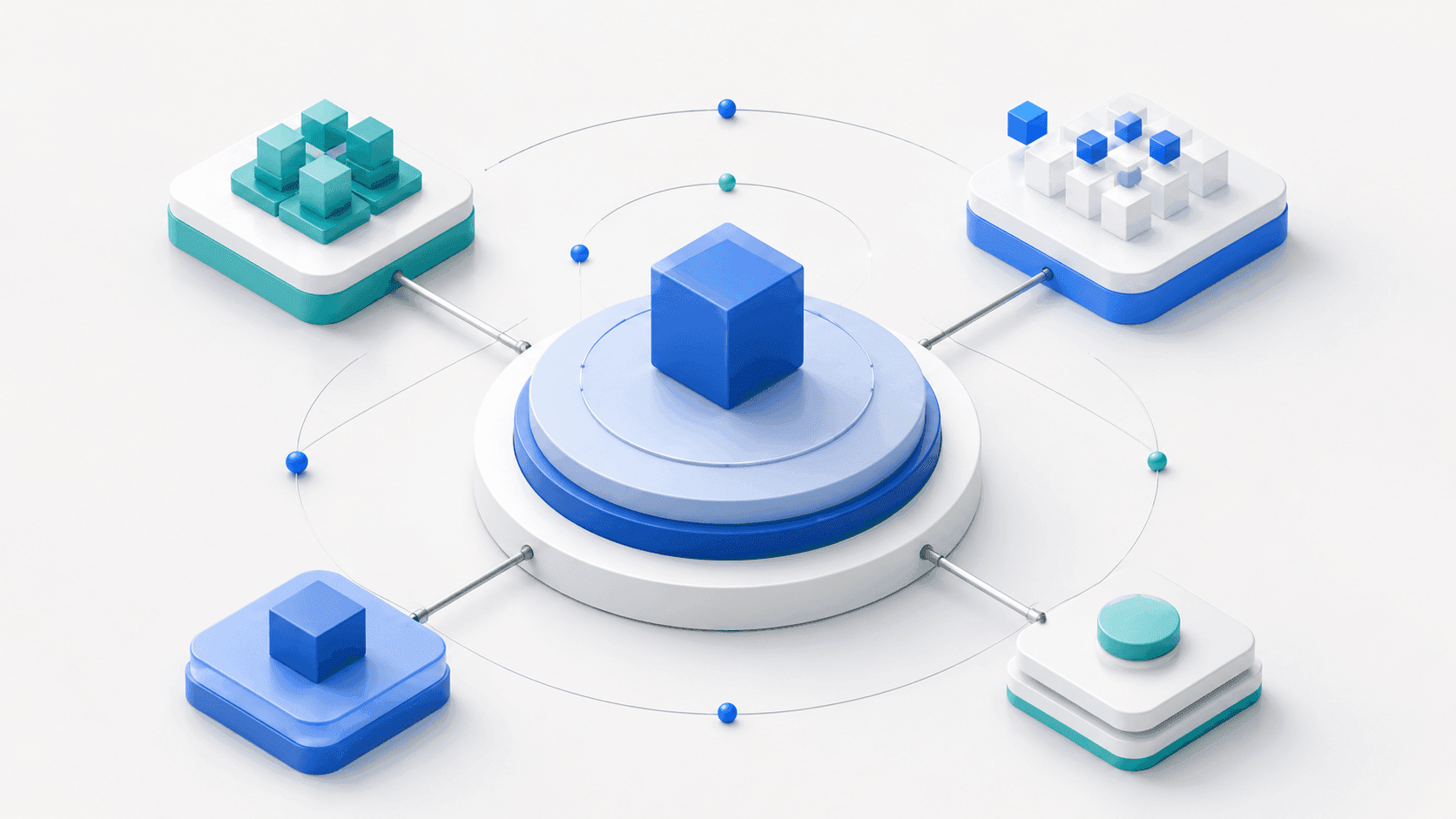
If the seven characteristics describe what an AI system should be, the four functions describe what the organization actually does to make that happen. They are how the framework becomes operational rather than aspirational, and they are the structure most enterprise AI governance programs in the U.S. are built on.
1. Govern: establish ownership and culture
The Govern function establishes the accountability structures that run across everything else: who owns AI risk, which policies apply, and how AI decisions connect to the enterprise risk management the business already runs.
This is where the role of an AI Champion or, when scale justifies it, an AI Center of Excellence (CoE) takes shape. A CoE works when it holds real authority to approve, block, or redirect an initiative, and when its guidance sits inside the same review cycles finance and legal already use.
Govern also owns the decisions that most AI programs make implicitly and then have to correct later, including what context each system is allowed to consume. This has become its own discipline, often called context engineering: the practices that determine which documents, conversations, tools, and data a model can access when generating an output. Access decisions of this kind sit inside governance because they define the boundary of what the system can know, and by extension what it can be asked to decide.
2. Map: catalog what AI you have and what risks it carries
The Map function creates the inventory and the risk classification. It is the piece most companies underestimate.
Nothing else in a governance program operates reliably without a picture of every AI system in use, whether it was built internally or arrived through a vendor. Classification follows: high-risk uses like credit decisions, hiring, healthcare diagnostics, or safety-critical operations require controls that a marketing chatbot does not. Most first inventories surface AI tools that leadership did not know were in production.
3. Measure: monitor how systems perform once deployed
The Measure function is continuous testing and monitoring. That includes accuracy on the outputs that matter, bias across the populations affected, drift as underlying data shifts, and incidents when the system behaves outside its intended range.
This is also where operational patterns like human-in-the-loop AI live. Human-in-the-loop, human-on-the-loop, and human-out-of-the-loop are the choices a company makes about where oversight belongs at each step. The right choice depends on the reversibility of the decision, the volume, and the regulatory context, and the wrong choice tends to surface in incident reports. For agentic AI systems, those choices set the perimeter for everything downstream, from the observability layer to the audit trail a governance program can produce later.
4. Manage: decide what changes when the system drifts
The Manage function turns findings into action through approval flows, escalation paths, retraining triggers, and deprecation rules for systems that no longer perform.
Manage is also where a subtle failure mode shows up. When AI accelerates the analysis but approvals still move at pre-AI speed, the organization creates its own decision latency problem. Governance without operational integration produces the slowdown it was meant to prevent.
NIST also maintains the Generative AI Profile and the AI RMF Playbook, companion resources that translate the framework into specific practices for generative AI systems and give teams concrete actions to implement inside each function. For most U.S. companies starting a governance program, the Playbook is the practical entry point.
Where ISO 42001 and the EU AI Act enter the picture
NIST is the operational spine for most U.S. programs, but companies with certain profiles end up using two additional frameworks.
ISO/IEC 42001:2023 is the first internationally certifiable management system standard for AI. Where NIST provides structure, ISO 42001 provides third-party validation, which matters when buyers, regulators, or limited partners want evidence of governance maturity in a format they already recognize, alongside SOC 2 and ISO 27001. The two frameworks are compatible by design, and NIST has published crosswalks showing how implementing the AI RMF supports ISO 42001 certification.
The EU AI Act is a risk-based regulation with extraterritorial reach. It applies to any AI system whose output affects users inside the European Union, regardless of where the provider is headquartered. Obligations for general-purpose AI models and governance are already in force, while the rules for high-risk systems (categories like biometrics, employment, credit scoring, and critical infrastructure) are being phased in over a staggered timeline defined by the AI omnibus agreement. Companies already operating under NIST tend to find that most of the documentation and process the EU AI Act requires is already in place, though the classification and reporting obligations are specific to the regulation.
For most U.S. companies, NIST is the operational backbone. ISO 42001 comes in when third-party evidence carries commercial value, and the EU AI Act enters the picture whenever the business touches the EU market directly or through its customers.
Where AI governance becomes business value
Governance shapes where AI adds value, how fast that value shows up, and whether that value holds up under buyer or regulatory scrutiny.
Internally, governance clears friction. When ownership, approval paths, and escalation rules are defined, teams stop stalling in front of decisions nobody has authority to make, and pilots reach production faster because the conditions for that transition were resolved in advance.

The commercial exposure shows up hardest in diligence and exit. Strategic acquirers, PE buyers, and IPO underwriters include governance questions inside technical due diligence: which AI systems run in the business, which ones influence customer-facing decisions, whether those systems have been tested for bias, and who is accountable when something goes wrong.
When the company cannot answer clearly, the finding moves into the deal terms, either as a price adjustment or as a post-close condition.
This concern is already showing up in the private equity market. ION Analytics published a piece titled Private equity's slow start on AI governance arguing that the gap is widening between funds that have started building governance across the portfolio and those still treating it as compliance overhead.
That same governance gap eventually reaches valuation. AI programs that reach production, create measurable impact, and hold up under diligence tend to have more than strong models behind them. They have governance structures, integrated data, executive alignment, and the operational discipline required to embed AI into daily decision-making, a theme covered in When AI Adoption Gets Ahead of AI Strategy.
How to build an AI governance program
Governance rarely fails on the framework itself. What tends to fail is the wiring, particularly in mid-market and PE-backed companies where compliance teams are smaller and dedicated governance capacity is scarce. This is a challenge covered from a leadership angle in What Mid-Market Leaders Need to Know About AI.

The organizations that make governance operational tend to invest in four things:
- Assessment. A structured AI maturity view identifies which systems are in use, where accountability actually lives, and which decisions depend on tools nobody is auditing. The output is a picture of where the highest-risk gaps are, not a maturity score for its own sake.
- Ownership. AI champions with real time allocated, not a second title added to a full role, and when the scale of activity justifies it, a CoE with defined authority to approve, hold, or redirect initiatives.
- Capability. Training designed for the roles that make decisions inside the governance model, not a generic "AI awareness" workshop. An operator learning how to interpret a model's confidence score is doing different work than a manager learning how to review an escalation from an agentic workflow, and the training has to match.
- Change management. Governance becomes real when it lives inside how work actually happens, not inside a policy document that reports up to a committee.
These four elements are what we see making the difference between governance that lives on paper and governance that changes how decisions get made. They are also the reason we structured our AI Adoption & Enablement practice around exactly this sequence: an assessment that maps where governance actually lives today, a champions model that puts ownership on people with time and authority, training designed for the roles that will make decisions inside the framework, and change management that lands the work inside existing operating rhythms.
AI governance and adjacent disciplines
Two disciplines are often used interchangeably with AI governance and are not the same thing. Understanding where each ends helps position governance correctly inside the organization:
Data governance addresses the quality, ownership, and lifecycle of the data itself, while AI governance addresses the systems that use that data to reach conclusions or take action. Data governance asks whether the input is trustworthy. AI governance asks whether the output should be trusted, and by whom. Most mature AI governance programs sit on top of a functioning data governance foundation; when the data layer is fragmented, the AI layer inherits the problem.
MLOps is the engineering discipline that operationalizes machine learning: deployment pipelines, versioning, monitoring, retraining, and rollback. It provides much of the technical infrastructure that AI governance relies on for the Measure and Manage functions. MLOps answers how a system runs reliably in production. AI governance answers who is accountable for how it runs, what risks it carries, and whether it should be running at all.
Where this goes next
The organizations that will get the most out of AI over the next several years are the ones that can explain what their systems are doing, defend the decisions those systems influence, and adjust when performance drifts. Governance is the layer that makes those three things possible.
For mid-market and PE-backed companies, that pressure is not a future problem: governance questions are already showing up earlier in diligence conversations, regulatory obligations are moving from published guidance into enforced requirements, and the models being adopted keep becoming more capable and less inspectable.
If your team is trying to map where the organization stands today and where the first structured moves make sense, our AI Adoption & Enablement practice starts with exactly that question.
Jul 2, 2026