

How Automation Helps Teams Scale Their Capacity
How much more work a team can handle with the people it already has, and how to find out before you approve the next hire.

Sep 15, 2026
Yes. Growing a business has traditionally meant adding people as demand increases, and hiring still costs what it always did. What has changed is how much work a team can handle with the people already in place.
An analyst who worked through forty case files a week two years ago can handle a good deal more today, and not because anyone is working faster. A chunk of what used to be manual is gone: reading the document, pulling out the numbers, entering them into the system, checking them against what the email said. The analyst still handles what requires judgment: reviewing, deciding, and sorting out whatever does not line up.
That starts to separate two things that have historically moved together: business volume and headcount. Capacity alone does not create growth. First, automation frees up time within the existing team. Then the business has to decide where that time goes: more clients, faster turnaround, or work the team could not take on before. A Gartner survey of 210 chief sales officers found that AI was saving sellers close to five hours a week, yet 72% of those organizations were reinvesting little of that time in higher-value work.
The practical question is what it would take to bill 30% more without adding 30% more people. That gets answered one process at a time, by measuring where the hours go today.
What can be automated today, and what still takes judgment
One rule of thumb holds up well here: if someone on your team can walk through a task end to end in fifteen minutes, that task is a candidate.
Plenty of workflows where the answer is often "it depends" still qualify, as long as the usual path is stable and the odd case can go to a person. The key is how much of the work follows a repeatable pattern.
Work that qualifies usually looks like this:
- Pulling information out of documents that show up in whatever format each client happens to use, from invoices and notices to bookkeeping exports and scanned PDFs.
- Checking two systems against each other and flagging exactly where they disagree.
- Classifying, routing, and applying rules the business already wrote down.
- Rebuilding the same report every month from the same sources.
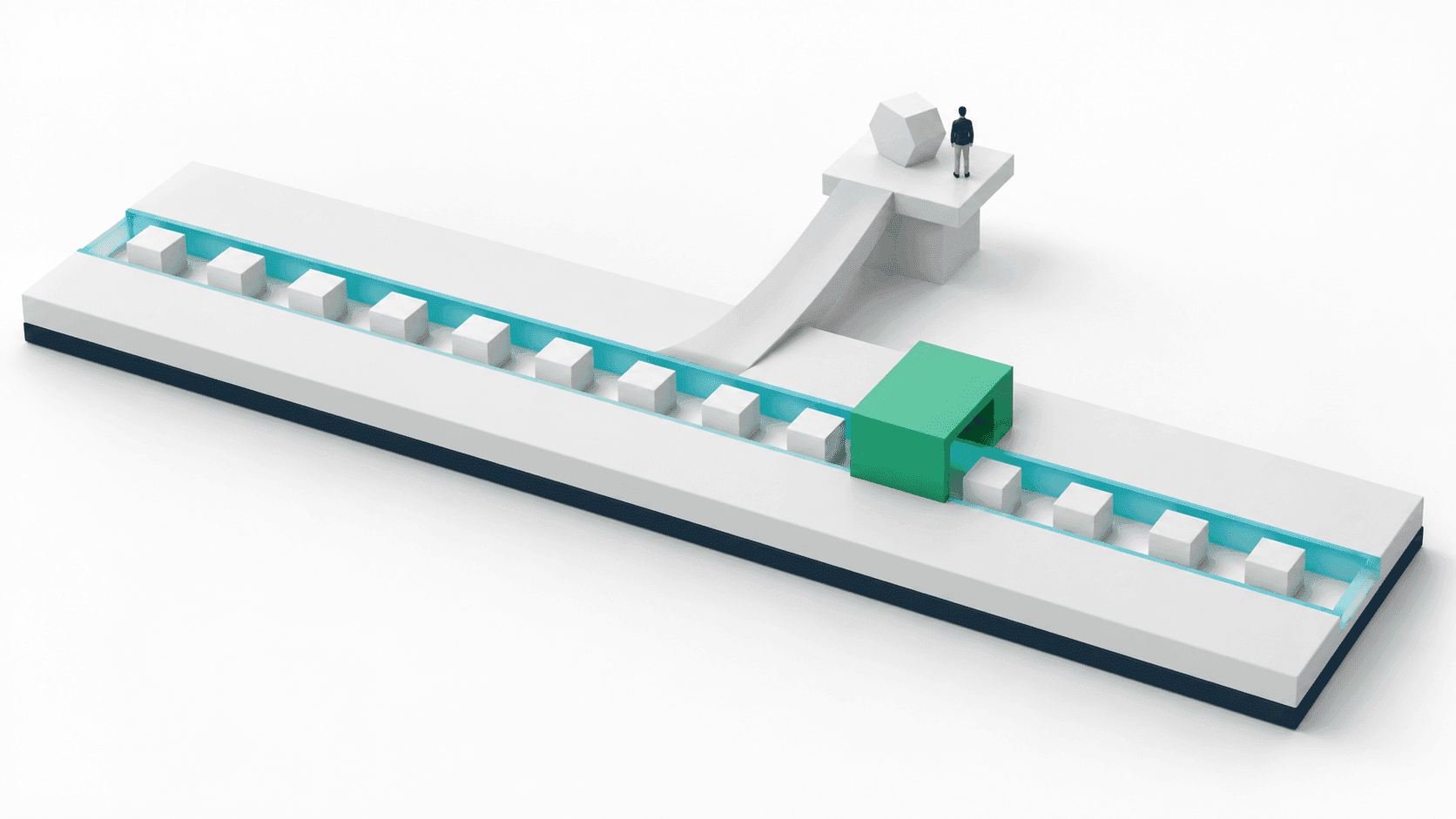
However, some work still requires human judgment: handling an exception nobody planned for, deciding how much risk to take on a new client, or resolving a situation where the data is wrong and the client disagrees. Parts of that decision-making can be documented, but much of it depends on context and cannot be reduced to a fixed set of rules. Those decisions should remain with a person.
That is why it makes more sense to look at individual tasks rather than entire roles. Most jobs include a mix of both. A tax preparer, a claims analyst, or an operations coordinator may have some tasks that can be automated and others that should remain with a person. The goal is to identify which is which.
That logic is already showing up in how companies plan their hiring. A survey of nearly 6,000 senior executives published by the NBER in February 2026, run together with the Atlanta Fed, the Bank of England, the Bundesbank, and Macquarie University, found that roughly two-thirds of the expected workforce reduction over the next three years would come from companies hiring fewer people rather than cutting existing jobs.
A single source of truth across a growing company
Esquire Depositions, a Gridiron Capital portfolio company and a U.S. leader in legal deposition services with nationwide presence, ran into this a few years ago. The company was integrating new acquisitions while managing an operation that was already close to capacity.
The symptoms were familiar for that stage: processes had grown reactive, too much of how things got done lived with a small group of people, and service requests took more steps than they needed to. Data was also spread across multiple systems, making it harder to standardize operations when integrating a new acquisition.

Making Sense paired technology modernization with process redesign:
- A centralized data architecture serving as a single source of truth.
- Automation aimed at the manual workflows eating the most time.
- Infrastructure built to carry national growth.
The results are documented in the case study: a 40% gain in workforce efficiency and fully centralized data. In Esquire's case, those operating improvements supported a broader value-creation plan that included a 10% increase in enterprise valuation.
Moving from manual processing to advisory work
An accounting firm serving private companies and holding groups faced a different capacity challenge. Its annual corporate return service was the entry point for almost every new client relationship, but it generated very little margin and required a significant amount of the team’s time.
The process was relatively straightforward and repetitive, which made it a good candidate for automation. Files arrived in each client’s format, and someone had to read them, transcribe the figures, and check for inconsistencies. When something did not line up, the team went through a cycle of emails, corrections, and rework before completing the return.
Making Sense built an AI platform that reads the files as they arrive, whatever format they come in, and classifies each item against the adjustment types the firm had already defined. Amounts and account selection are resolved by the firm's own accounting rules rather than by the model, which keeps every number traceable, and the accountant remains responsible for the final review. As a result, the firm reduced manual work per return by up to 70% and gained the capacity to take on more clients with the same team.
The impact went beyond processing more returns with the same team. The time saved on low-margin work was redirected to advisory services, where the firm bills considerably more per hour. That allowed the team to spend more of its time on higher-margin work.
What to measure as roles shift to higher-value work
As routine work is automated, the skills the team needs change with it. A role built around data entry and reconciliation becomes a role built around analysis, and the next hire for that seat costs more.
That does not necessarily make the operating model more expensive, because the more useful measure is the cost of processing each unit of work. That means when growth depends largely on adding people, labor costs tend to rise along with volume. When technology takes on part of the repeatable work, volume can grow faster than labor costs, bringing the cost per unit down.
Revenue per employee provides another way to measure that shift. If revenue grows faster than headcount, the metric improves even if the average cost per employee increases. One recent public example comes from Remote, the payroll platform. TechCrunch reported that the company had crossed $300 million in annual recurring revenue, become cash-flow positive, and increased revenue per employee by 50% without adding headcount.
The technology itself belongs in that calculation. AI consumption grows with usage, so it has to be factored into the cost per unit as automation scales. We covered that question in more detail in a separate piece.
How to test this on one process before going further
The first process to try this on is almost never the most important one in the company. Look for four things:
- Enough volume that a change in cost per unit is visible
- Steps that happen the same way most of the time
- A baseline you can measure against
- Exceptions a person can handle without stopping the process
The balance between repeatable work and exceptions matters. If most cases follow a consistent process and only some require human intervention, you can test whether automation creates meaningful capacity. If every case requires a different approach, it is probably a poor candidate for a first test.
The goal of that test is simple: measure how much additional work the current team can handle and at what cost. If volume increases while cost per unit falls, you have evidence that the approach can scale. If it does not, you have learned that before making a larger investment.

That is part of the work we do in Discovery: understanding how the operation works today, identifying where manual work is consuming capacity, establishing a baseline, and determining where technology can have the greatest impact.
None of this depends on a large program. It depends on knowing which part of the work is repeatable, what it costs to process one unit today, and where the time goes once it is freed. Companies that track those three things stop treating the next hire as the only way to handle more volume.
So the question becomes specific: which process could your current team handle at greater volume, without adding headcount at the same rate?
To identify that process, book a conversation with us.
Sep 15, 2026