
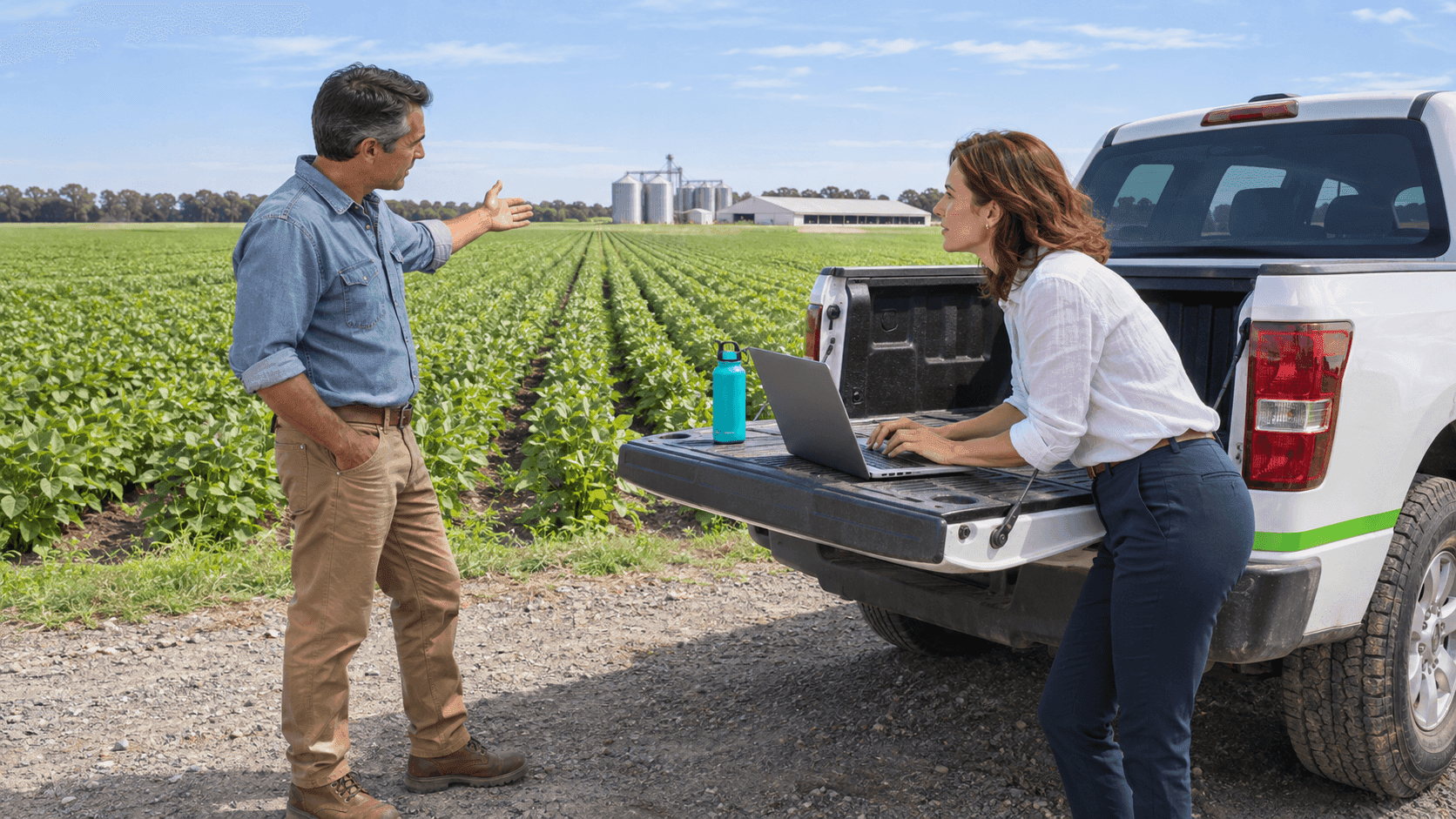
What Is AgTech? How Technology Drives Precision and Profitability
Across the agricultural value chain, custom software, connected data, and AI are helping businesses improve operational efficiency, make better decisions, and create new opportunities for growth.

Nov 12, 2026
Livestock genetics companies manage millions of animal records, agricultural distributors coordinate transactions across different business units, and sustainability providers collect information from geographically dispersed operations. As these activities become more connected, the challenge shifts toward making that information accessible, reliable, and useful.
For technology leaders, agtech covers far more than the equipment and digital tools used in production. AgTech encompasses the software, data infrastructure, automation, and intelligent systems that help businesses throughout the agricultural value chain operate more efficiently and grow.
The commercial opportunity is significant, particularly for established companies whose technology has evolved alongside their operations. Modernizing outdated platforms, connecting fragmented systems, and developing applications around real user needs can reduce operating costs, improve customer experiences, and create the foundation for more profitable growth.
Where agtech creates value, from genetics to distribution
AgTech, short for agricultural technology, refers to technologies designed to improve the production, management, distribution, and sustainability of agricultural products and services.
Precision agriculture is one of its best-known applications, using sensors, GPS guidance, and data analytics to optimize farming decisions. Yet the broader AgTech ecosystem includes many other businesses whose products and services depend on sophisticated technology.
The ecosystem also includes:
- Livestock genetics and animal health companies
- Agricultural input distributors
- Farm management software providers
- Equipment manufacturers
- Environmental measurement and traceability platforms
Across these segments, technology does different jobs. A genetics platform puts breeding history in a consultant's hands during a farm visit. An integrated management system keeps inventory, finances, and field operations in one ledger. Sustainability applications gather environmental data across large areas and hold it to a standard that survives verification.
For AgTech companies developing these solutions, the quality of their software architecture, integrations, and user experience directly influences how effectively customers can use their products. The same work decides how fast they ship the next feature, how many customers renew, and whether growth costs more than it returns.
Building agricultural software around real operational needs
Designing software for agricultural environments requires an understanding of how people work outside conventional office settings. Connectivity can be inconsistent, information may need to be captured while users are moving between locations, and operational responsibilities often vary considerably across roles.
A mobile application used for soil sampling, for example, must preserve accurate records even when an internet connection is unavailable. Location data, timestamps, and sample identifiers need to remain consistent because errors introduced during collection can affect subsequent analysis, reporting, and verification.
Similar requirements arise when livestock consultants access genetic information during farm visits or agricultural sales representatives record transactions directly with customers.
In those conditions, user experience and reliability decide whether the product gets used at all. When an app adds two extra taps and needs a signal to save, the sample gets written on paper and loaded that night, if it gets loaded at all.
Addressing these challenges through custom software development requires decisions that account for the entire workflow, from data capture and validation to synchronization with the company's core systems.
Soil samples across 13.6 million acres
Making Sense applied this approach in its work with Perennial, a company specializing in measurement, monitoring, reporting, and verification for agricultural programs. We developed a mobile application that enables farmers and researchers to collect and analyze soil information more efficiently, supporting data management across 13.6 million acres.
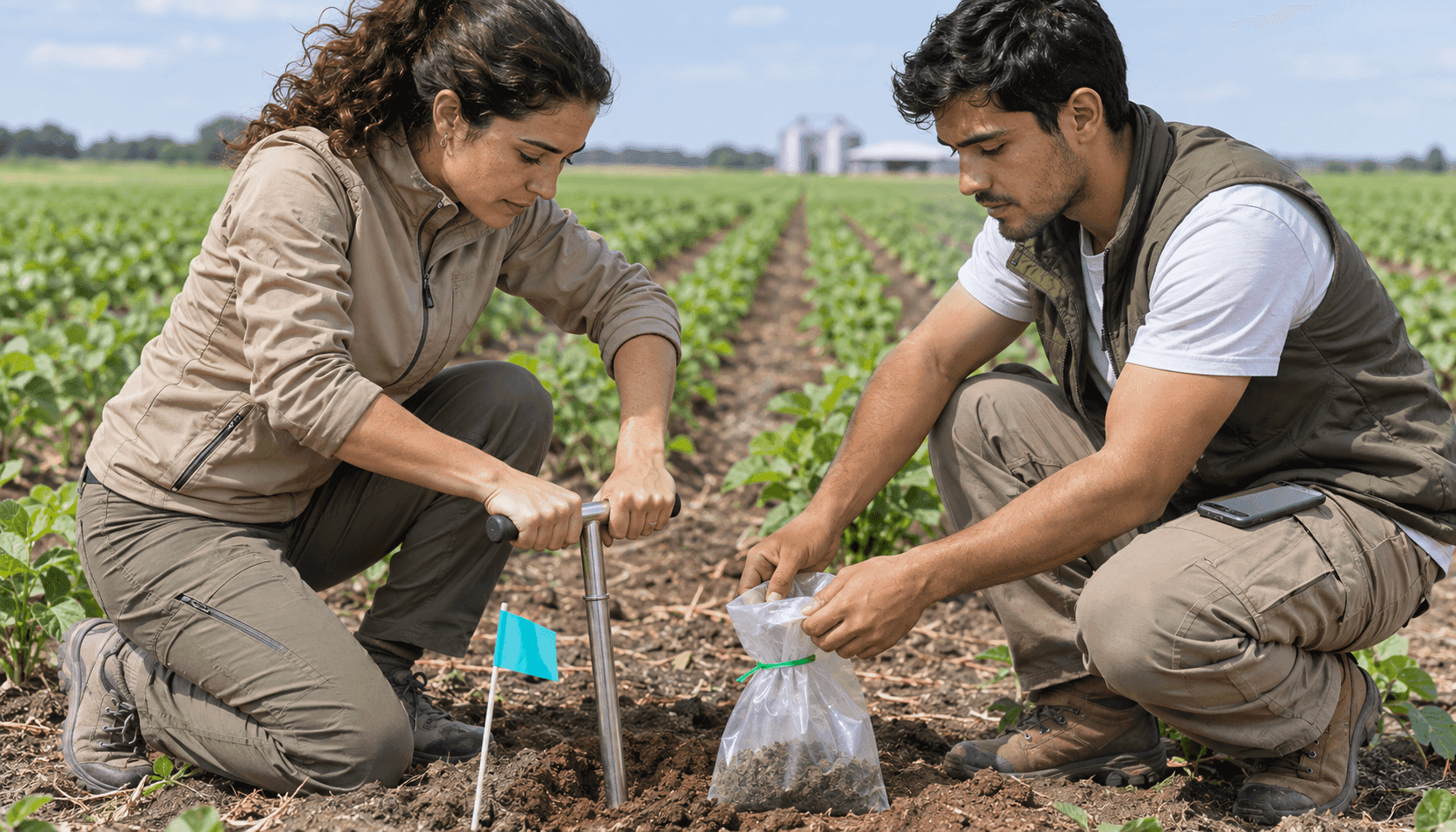
The value of this type of solution extends beyond convenience for field teams. Reliable data collection supports the integrity of downstream processes and allows organizations to manage increasingly complex information without introducing equivalent administrative burdens.
Modernizing agricultural platforms to improve efficiency and scalability
For established AgTech companies, legacy modernization presents a particular challenge. Platforms developed over many years often contain extensive operational knowledge, historical records, and business rules that customers rely on every day.
As these systems age, maintaining them can require growing amounts of engineering effort. Introducing new functionality becomes more complicated, integrations take longer to develop, and infrastructure costs may increase without delivering corresponding improvements in performance.
The consequences extend to commercial strategy. When an existing architecture limits the speed of product development or makes expansion difficult, technical constraints begin to influence which markets and opportunities a company can pursue.
Modernization therefore requires a careful assessment of which components should be retained, improved, or replaced. A phased approach can preserve essential business processes while introducing cloud infrastructure, better integration capabilities, and more flexible applications.
The economic value of connected dairy technologies
The relationship between agricultural technology and profitability is particularly evident in dairy management.
A 2026 study by the USDA Economic Research Service, drawing on Agricultural Resource Management Survey data, found that dairies using more than one type of precision dairy technology (data support, breeding, or non-robotic milking) earned $3.18 more in net returns per hundredweight of milk than nonadopters.
The study looks at adoption on the farm, not at the vendors behind it. But the dairies earning that premium run on platforms that pull breeding, nutrition, and production records into one place, and someone has to build those platforms.
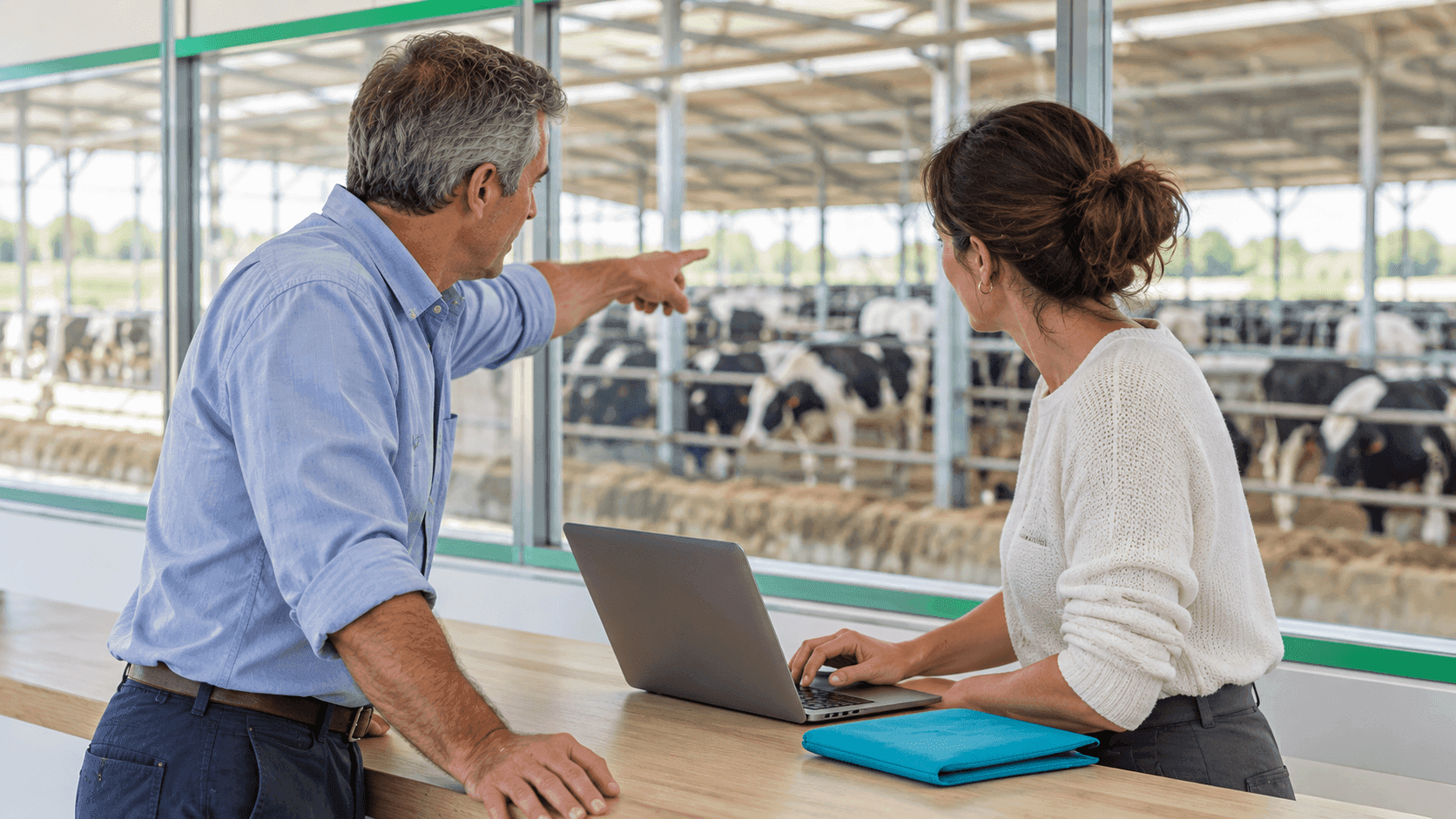
Making Sense encountered this challenge while partnering with Valley Agricultural Software (VAS), part of URUS Group and the leading U.S. provider of dairy management systems.
Founded in 1981, VAS manages data on more than 10 million cows across upwards of 3,000 dairies. After 30 years of development, the applications supporting herd performance, nutrition, and farm economics needed to be rebuilt. The infrastructure underneath them limited scale, kept data out of sync between users, and made every new product harder than the last.
Our collaboration began in Tulare, California, watching how dairy operators work through a day. Based on those findings, we helped modernize VAS's technology ecosystem through cloud migration, improved data synchronization, and responsive web and mobile applications.
The initiative reduced operational costs by 30%, supported by cloud infrastructure, automated backups, and lower supervision requirements. VAS held its 60% share of the U.S. dairy market through the transition and now has active users in more than 100 countries.
A similar need for reliable, accessible information shaped our work with URUS itself, VAS's parent group and a global leader in dairy and beef cattle genetics. Making Sense developed tools that integrate data across more than 750 dairies and 4 million animals, providing results in under three seconds to support consultants during breeding and reproductive planning.
Improving business performance through system integration and automation
Agricultural businesses frequently rely on systems introduced at different stages of their development. A distributor may run machinery sales on one ERP and agricultural inputs on another, with separate applications for inventory, customer records, and financial reporting.
These arrangements can remain manageable when transaction volumes are relatively low. As the organization grows, however, disconnected systems create more opportunities for duplicated work, inconsistent information, and delays between departments.
A sales rep calls a customer without knowing that another unit sold to them last week. Someone in finance spends the afternoon reconciling two records that should have matched on their own. That is capacity that never reaches a customer.
Integrating these systems provides the foundation for more effective automation. Through intelligent workflow automation, companies can reduce manual handoffs, synchronize information, and introduce automated processes with appropriate validation and exception handling.
Potential applications include order processing, inventory updates, customer data management, and sustainability reporting. Prioritization should reflect the volume of repetitive work, the cost of errors, and the operational consequences of delayed information.
When four business units cannot see the same customer
Grupo El Surco, an agricultural inputs retailer in Argentina, had four business units that had grown with their own sales tools and separate ERP systems. A customer buying from two of them was invisible to both.
Making Sense worked with the company to implement a centralized data platform that improved information sharing and supported more coordinated sales activities. The initiative also included an AI-powered WhatsApp solution for tracking customer interactions.
Connecting information that had been spread across separate systems gave the company a single view of each customer and opened the door to cross-selling between units.
For organizations considering similar initiatives, the most useful starting point is identifying where information gaps or manual handoffs have a direct financial consequence. This makes it possible to evaluate automation through operational metrics and commercial outcomes rather than the number of tasks automated.
Applying AI to agricultural decisions and workflows
As agricultural platforms consolidate more information, artificial intelligence can help organizations identify patterns, improve forecasting, and support decisions that would otherwise require extensive manual analysis.
The applications vary across the industry. A distributor can model demand for inputs by region before the season starts. A livestock technology provider can read years of performance data to sharpen the recommendations it gives managers. Equipment companies use the same operational records to plan maintenance and allocate machines.
These opportunities depend on the quality and accessibility of the underlying information. Incomplete records, inconsistent formats, and disconnected systems can limit model performance, making data integration and governance important parts of implementation.
AI-powered assistants and agents introduce additional possibilities for the processes surrounding those decisions. Depending on the system's capabilities and permissions, they can help employees retrieve information, prepare documents, monitor operational conditions, or coordinate activities across applications.
Relevant use cases include:
- Providing sales teams with product and inventory information from connected systems.
- Converting agronomists' field notes into structured reports for review.
- Identifying unusual patterns in livestock or equipment data and notifying specialists.
- Preparing traceability documentation from verified operational records.
The appropriate level of automation depends on the consequences of each action. Systems that generate draft reports require different controls from those authorized to update inventory records or initiate transactions.
Before deploying more autonomous workflows, companies need to establish data access permissions, validation procedures, monitoring, and clear rules for human intervention.
Adoption decides the rest. An AI application built for agricultural sales reps has to fit the rhythm of their customer calls. A tool for livestock specialists has to respect the judgment those specialists are paid for.
Prioritizing technology investments for measurable returns
AgTech companies rarely face a shortage of possible technology initiatives. Product improvements, legacy modernization, automation, and AI can all offer value, but they compete for development resources and investment budgets.
For example, a farm management software provider experiencing slow reporting and unpredictable releases may achieve greater immediate value through performance optimization and architectural improvements than by introducing additional features.
Making Sense's work with Albor demonstrates this type of prioritization. As its farm management platform expanded, reporting bottlenecks and technical limitations began affecting performance and development efficiency. Our work focused on database and reporting optimization, infrastructure improvements, architectural evolution, and more predictable release processes.
Reporting response times for critical use cases dropped by more than 90%, incidents in the most affected environments fell 70%, and releases moved from unpredictable deployments to a three-week cadence, a 75% acceleration.
A structured discovery process helps organizations make similar decisions by assessing business goals, technical constraints, implementation complexity, and expected returns before defining a roadmap.
Evaluation should include measurable indicators such as:
- Operating costs: Infrastructure expenses, maintenance effort, and manual processing costs.
- Product performance: Response times, reliability, adoption, and customer retention.
- Development efficiency: Release frequency, time-to-market, and engineering capacity.
- Commercial outcomes: Revenue opportunities, customer expansion, and scalability.
For private equity investors evaluating AgTech companies, these considerations also influence valuation and post-acquisition planning. Technical debt, fragmented systems, and limited scalability raise the capital a growth plan needs. A well-structured platform does the opposite, and the operational gains often carry over to other companies in the portfolio.
What to look for in an agtech technology partner
Selecting a technology partner for precision agriculture requires evaluating experience with the operational realities of the sector as well as the ability to develop reliable, scalable software.
Relevant capabilities include agricultural data integration, field-ready UX, cloud modernization, workflow automation, and experience maintaining continuity during complex technology projects.
Companies should also look for evidence of production implementations and measurable results, particularly when existing systems support critical customer operations.

Making Sense has worked across several areas of the agricultural technology ecosystem, including dairy management, livestock genetics, soil data collection, agricultural ERP platforms, and input distribution.
Our experience includes modernizing VAS's dairy management ecosystem, reducing operational costs by 30%, and developing Perennial's soil data application, which supports the management of 13.6 million acres. Work with URUS, Albor, and Grupo El Surco further demonstrates our experience addressing complex data, software, and integration challenges.
With more than two decades of experience and development hubs in Latin America, our senior multidisciplinary teams collaborate in real time with U.S. companies, combining technology strategy, product design, software engineering, and AI implementation.
Frequently asked questions
What is the difference between AgTech and precision agriculture?
AgTech encompasses technologies used throughout the agricultural value chain, including genetics, farm management, distribution, and sustainability. Precision agriculture is a specialized area focused on using data and technology to optimize agricultural production decisions and resource allocation.
How can AgTech improve profitability?
AgTech can improve profitability through lower operating costs, better resource utilization, more reliable information, and more efficient workflows. The financial impact depends on the technology implemented, the business processes involved, and how effectively the solution is adopted.
Can agricultural software work in low-connectivity environments?
Yes. Applications designed with offline capabilities can store information locally and synchronize records when connectivity becomes available, allowing teams to continue working in remote agricultural environments.
When should an AgTech company modernize its existing software?
Modernization becomes particularly relevant when legacy systems limit product development, increase maintenance costs, affect performance, or make integration with new technologies difficult. The appropriate approach depends on the condition of the existing platform and its importance to daily operations.
Turning agricultural technology into business value
The opportunities created by AgTech extend throughout the agricultural value chain, from specialized livestock platforms and environmental data systems to the software supporting distribution and commercial operations.
Realizing that potential comes down to technology decisions grounded in how the business makes money. A reliable field application improves everything downstream of it. A modern architecture removes the ceiling on what the product team can attempt next, and connected workflows take administrative work off people who were hired for something else.
For AgTech companies, the greatest opportunity often begins with understanding which limitations currently affect performance and identifying the investments most likely to deliver measurable improvements.
At Making Sense, we bring together industry experience, technology strategy, and hands-on engineering to help agricultural businesses address those challenges and build for sustainable growth.
Explore Making Sense's AgTech solutions to learn how our experience in software development, modernization, automation, and AI can support your next technology initiative.
Nov 12, 2026