
How to Modernize Legacy Systems Step by Step
Legacy systems can slow growth and increase risk. Here’s a structured, step-by-step approach to modernize your technology while protecting business continuity

Feb 19, 2026
Many mid-market companies still run critical operations on systems built in the 1990s, and in some cases even earlier. These platforms power billing, logistics, underwriting, reporting, and customer data. They work. They generate revenue. And that reliability is precisely why they remain in place.
The tension appears when the business evolves faster than the architecture underneath it.
In our experience, legacy systems rarely collapse. What happens instead is slower and more subtle: releases take longer, integrations require workarounds, reporting becomes reactive, and engineering capacity shifts from building new value to preserving old structures.
For executive teams and private equity operating partners, this is not just an IT concern. Architecture decisions begin to shape operating leverage, acquisition integration speed, compliance exposure, and the company’s ability to scale without proportional increases in headcount.
Modernization, therefore, is not about replacing what exists. It is about ensuring that the systems supporting the business are aligned with where the business is going next.
This guide outlines a structured, step-by-step roadmap to modernize legacy systems while protecting operational continuity and long-term value.
What are legacy systems and why they become a problem
A legacy system is any application, infrastructure, or technology stack that continues to support core operations but relies on outdated architecture, unsupported technologies, or rigid integrations.
We explore this in more depth in our article on legacy system modernization, where we outline the most common patterns organizations encounter when modernizing long-standing platforms.
In practice, legacy environments tend to share familiar traits:
- Monolithic architectures that are difficult to evolve safely
- On-premise infrastructure that limits elasticity
- Limited API capabilities that complicate integrations
- Manual or semi-automated workflows that do not scale efficiently
- High maintenance overhead across time and budget
- Dependence on institutional knowledge held by a small group of individuals
Over time, technical debt becomes operational friction. Small changes require disproportionate effort. Integrations behave unpredictably. Security updates demand extensive regression testing. Reporting depends on workarounds instead of real-time visibility.
The issue is not that these systems are flawed. Most were well-designed for the business realities of their time. The challenge is that today’s expectations, cloud elasticity, real-time analytics, security compliance, and AI enablement, require architectural flexibility they were never built to provide.
| Legacy environment | Modern environment |
| Monolithic architecture | Modular or microservices-based |
| On-prem infrastructure | Cloud-native or hybrid |
| Manual workflows | Automated processes |
| Limited integrations | API-first ecosystem |
| Reactive maintenance | Observability-driven optimization |
| CapEx-heavy cost model | Elastic OpEx model |
What once provided stability can gradually become a growth limiter.
Why modernizing legacy systems is a business priority
Modernization conversations often begin in technology teams. The urgency, however, usually emerges in the executive room.
In practice, we see modernization become unavoidable when systems begin shaping business decisions instead of supporting them.
Here are the signals that typically shift modernization from “important” to “strategic.”
1) Cost starts rising without buying you new capability
When most engineering capacity is absorbed by maintenance, upgrades, and integration workarounds, innovation slows. Budgets rise, but the organization does not gain new competitive advantage.

We frequently encounter environments where teams are highly capable, yet constrained by architecture that makes change expensive. The issue is not talent. It is structural limitation.
Over time, the business starts paying twice: in direct infrastructure cost and in missed opportunity.
2) Risk becomes harder to manage
Legacy risk is rarely dramatic. It accumulates quietly.
Security patches require extended regression cycles. Compliance updates affect multiple interconnected systems. Disaster recovery plans exist, but have never been tested under real stress.
What concerns leadership most is not vulnerability headlines. It is response time. How quickly can the organization adapt when regulations change, when a partner integrates, or when an acquisition needs to be absorbed?
Architecture directly affects that agility.
3) Growth creates integration pressure
As companies expand across products, geographies, or acquisitions, integration complexity increases exponentially.
We often see this during M&A cycles. What appears manageable in a single-business environment becomes brittle when systems must communicate across newly combined entities.
Integration turns into a series of custom patches instead of a repeatable capability. At that point, growth begins to stress the system.
4) Valuation and exit readiness come into focus
In private equity-backed environments, modernization is closely tied to value creation.
Scalable infrastructure, clean data architecture, and documented system dependencies reduce perceived technology risk. That clarity supports faster integration, more predictable operational performance, and stronger investment narratives.
Architecture may not appear on the balance sheet, but it influences how confidently the future can be projected.
Modernization, in this context, is not about replacing legacy systems because they are old. It is about ensuring that infrastructure, data, and integration capabilities support the next stage of the company’s strategy.
When architecture begins limiting optionality, modernization becomes a business decision.
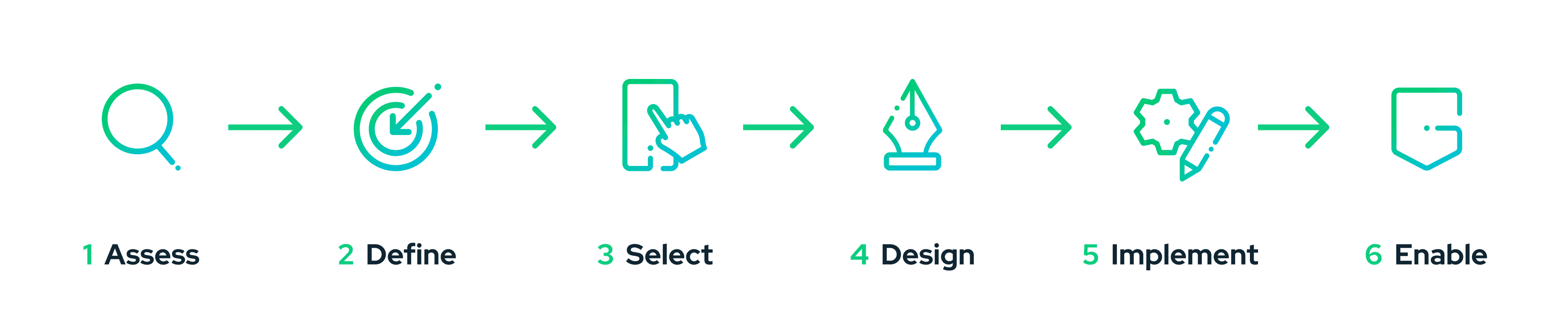
How to modernize legacy systems: a step-by-step approach
We’ve seen modernization efforts stall when they are framed purely as technical rewrites. What begins as an upgrade initiative gradually expands in scope, absorbs budget, and loses executive sponsorship.
Modernization works best when it is approached as a structured business evolution, sequenced deliberately and tied to measurable outcomes.
Below is the roadmap we most often use when guiding legacy modernization initiatives in mid-market and private equity-backed environments.
Step 1: assess the current ecosystem with business context
What happens in this phase:
This is not just a technical audit. It is a structured discovery process that combines architectural assessment with operational analysis.

In practice, this includes:
- Application and infrastructure inventory
- Integration mapping and dependency analysis
- Data flow evaluation
- Security posture review
- Operational bottleneck identification
- Cost structure analysis (run vs change budget)
In many assessments, we discover that no single team has a complete map of system dependencies. Knowledge is distributed. Documentation is partial. Decisions were made under time pressure.
This step creates clarity before change begins.
We describe our Discovery methodology for this stage in more depth.
Why it matters:
Modernization decisions made without ecosystem visibility tend to overcorrect or underinvest.
Leadership needs to understand:
- What is genuinely business-critical
- What is redundant or can be retired
- Where risk actually concentrates
- Where modernization will generate the fastest measurable impact
Without this clarity, architecture decisions become reactive.
Key decisions:
- Which components should be modernized first?
- Which can be safely decommissioned?
- What degree of transformation is realistic given timeline and capital constraints?
- Is the primary objective cost efficiency, integration readiness, or growth enablement?
This step sets the tone for the entire program.
Step 2: define the business case and measurable outcomes

What happens in this phase:
Modernization is translated into operational and financial targets, such as:
- Reducing infrastructure and maintenance costs
- Increasing deployment frequency
- Improving uptime and performance
- Enabling real-time reporting
- Preparing data architecture for AI integration
The goal is to move from “we need to modernize” to “we expect these outcomes.”
Why it matters:
When modernization remains abstract, it competes with other initiatives for funding. When it is framed as margin improvement, integration acceleration, or exit readiness, it becomes strategically anchored.
We’ve seen initiatives gain momentum only after KPIs were clearly defined and tied to quarterly reporting cycles.
Key decisions:
- What is the expected return and over what horizon?
- How will progress be measured?
- What operational metrics will indicate early success?
- How will accountability be assigned across business and technology leaders?
Alignment here prevents fragmentation later.
Step 3: select the right modernization pathway
There is no universal modernization strategy. The appropriate approach depends on system maturity, risk tolerance, and investment appetite.
| Strategy | What it means | When it fits |
| Rehosting | Lift and shift to cloud | Infrastructure optimization with low disruption |
| Replatforming | Minor adaptation for cloud capabilities | Moderate improvement with limited redesign |
| Refactoring | Code restructuring for scalability | Performance and agility gains |
| Rebuilding | Full architectural redesign | Long-term strategic reset |
| Replacing | Move to SaaS | Commodity or standardized functions |
Why it matters:
We’ve seen organizations commit to full rebuilds when incremental replatforming would have delivered faster ROI. We’ve also seen lift-and-shift migrations postpone structural problems rather than solve them.
Choosing the right pathway determines both speed and stability.
Key decisions:
- What level of disruption is acceptable?
- Is the internal team prepared to support a new architecture?
- Does the business require immediate efficiency gains or structural transformation?
Clarity at this stage prevents scope creep and uncontrolled expansion.
Step 4: design a scalable, future-ready architecture
This is where modernization becomes structural.
What happens in this phase:
- Define cloud strategy (public, hybrid, multi-cloud)
- Establish API-first integration principles
- Decide between modular monolith or microservices
- Redesign data architecture for analytics and AI
- Strengthen security and compliance layers
Why it matters:
Modernization should remove structural constraints, not replicate them in a new environment. Architecture must support:
- Growth without exponential headcount increase
- Faster integrations
- Better data visibility
- Operational resilience
In our work with Valley Agricultural Software (VAS), a global dairy management platform with more than four decades in the industry, modernization meant migrating a deeply entrenched legacy system to a cloud-based environment.
The architectural decisions were directly tied to scalability and cost efficiency, resulting in a 30% reduction in operational costs while enabling broader collaboration across markets.
This was not a cosmetic upgrade. The architectural shift unlocked structural flexibility and long-term resilience.
Key decisions:
- How modular should the architecture become?
- What long-term data model will support analytics and AI?
- How will integration be governed?
- How will security evolve alongside scale?
Architecture must expand optionality, not restrict it.
Step 5: implement incrementally and protect operations
What happens in this phase:
- Prioritize high-impact modules
- Define phased releases
- Run parallel environments when necessary
- Adopt DevOps and CI/CD practices
- Monitor performance continuously
We rarely recommend large “big bang” migrations. Incremental execution reduces operational exposure and allows measurable progress at each phase.
Why it matters:
Large “big bang” migrations increase risk dramatically. Incremental modernization reduces disruption and delivers visible wins early.
This approach also protects revenue-generating operations while transformation progresses.
Key decisions:
- Which module delivers immediate business value?
- How do we ensure continuity during migration?
- How do we avoid productivity dips during transition?
Disciplined phasing often determines whether modernization strengthens or destabilizes the business.
Step 6: institutionalize optimization and governance
Modernization does not end at deployment.

What happens in this phase:
- Implement observability and monitoring
- Optimize cloud cost continuously
- Expand automation
- Introduce governance models
- Prepare infrastructure for advanced analytics and AI
Why it matters:
Without governance, modern systems can accumulate a new generation of technical debt. Optimization must become a capability, not a one-time effort.
Key decisions:
- Who owns architectural governance?
- How will performance be reviewed quarterly?
- How will technical health be measured alongside financial KPIs?
Tools and technologies that enable legacy modernization
In our day-to-day work, modernization rarely fails because the wrong tool was selected. It usually fails because architecture decisions were made without a clear understanding of how the business operates.
Technology should follow structure. Not the other way around.
That said, certain capabilities consistently accelerate modernization when applied deliberately.
Cloud platforms: changing the cost and resilience equation
Moving from on-premise infrastructure to the cloud is often the most visible step in modernization. But lift-and-shift alone rarely delivers transformation.
What we frequently see is this:
- Initial migrations improve flexibility, but cost optimization requires architectural redesign.
- Disaster recovery becomes more structured, but only if observability is implemented properly.
- Infrastructure becomes elastic, but governance must evolve alongside it.
Cloud platforms provide elasticity and resilience. Architecture determines whether those capabilities translate into measurable business outcomes.
Containerization and modularization: reducing the blast radius of change
In legacy environments, a single deployment can impact the entire system. That fear slows iteration.
Containerization and orchestration technologies allow teams to isolate services, deploy independently, and scale selectively.
The real value is not microservices for their own sake. It is the ability to reduce systemic risk when introducing change.
When modernization is phased, modularity becomes a risk-management mechanism.
API-first design: turning integration into a capability
Integration complexity is one of the most underestimated modernization challenges.
We often see organizations spend disproportionate effort building one-off connectors between systems. Over time, those connectors create fragility.
API-first architectures transform integration from a project into an operating model. They allow:
- Faster partner onboarding
- Cleaner data exchange
- More reliable cross-system communication
- Structured enablement of analytics and AI use cases
Integration maturity frequently determines how well companies scale through acquisition or expansion.
DevOps and CI/CD: restoring confidence in change
Legacy systems often condition teams to fear releases. Deployment windows become events. Testing cycles expand. Rollbacks are complicated.
Introducing CI/CD pipelines and automated testing changes that dynamic.
The impact is not only speed. It is predictability. When teams trust their release process, innovation accelerates.
Over time, modernization becomes less about architecture and more about operational confidence.
Observability and monitoring: making performance visible
In many legacy environments, issues are detected through customer complaints or internal tickets.
Modern observability shifts that posture. Real-time metrics, tracing, and alerting enable proactive management.
The benefit is not only technical stability. It is leadership visibility. When system health becomes measurable, decisions become grounded in data instead of assumptions.
Data architecture and AI readiness: enabling future optionality
Many modernization initiatives include ambitions around analytics or AI. Yet we frequently encounter fragmented data models that prevent even basic reporting.
Modern data architecture:
- Centralizes visibility
- Standardizes pipelines
- Improves data quality
- Enables structured experimentation
Without data discipline, AI remains conceptual. With it, AI becomes operational.
A practical perspective
The most successful modernization initiatives align three dimensions:
- Architectural structure
- Tooling capabilities
- Business objectives
When those three move in the same direction, modernization becomes durable.
When tooling leads without structural clarity, complexity simply migrates to a new environment.
Preparing your architecture for what comes next
One pattern we consistently observe is that legacy modernization becomes urgent only when friction turns visible. A delayed integration. A stalled product launch. An acquisition that exposes architectural constraints.

By then, the cost of inaction is already measurable.
The organizations that navigate modernization successfully tend to act earlier. They evaluate their systems before growth forces their hand. They assess architectural resilience with a multi-year horizon in mind, not just the next quarterly roadmap.
Modernization does not require replacing everything. It requires clarity. Understanding which components sustain competitive advantage, which limit optionality, and how to evolve the system without destabilizing operations.
Structure matters more than speed.
When architecture is aligned with strategy, technology stops dictating constraints and starts enabling choice.
If your current growth plans depend on systems designed for a different era, it may be time to evaluate how prepared your architecture truly is.
You can explore our approach to legacy system modernization and see how structured assessment, phased execution, and disciplined architecture design reduce uncertainty while supporting long-term resilience.
Feb 19, 2026