

How AI in Talent Acquisition Is Transforming Modern Recruiting
How AI is reshaping my day-to-day work as a Talent Attraction Lead and transforming the way we hire at Making Sense.

Nov 19, 2025
If there is one thing I’ve learned leading Talent Attraction at Making Sense, it is that recruiting today moves at a completely different speed than it did even a few years ago. Talent teams are expected to evaluate candidates quickly and accurately, support fluctuating hiring needs, and offer a great experience at every touchpoint, all without expanding the team. And in this context, AI is not just a new tool, it is a fundamental shift in how we work.
Across the United States, more than half of HR leaders are already experimenting with AI to support sourcing and screening, according to this Forbes article. That tracks with what I experience every day. I need tools that help me stay present during interviews, speed up analysis, and give me more time for conversations that actually matter.
At Making Sense, the adoption of AI inside our Talent Attraction team isn’t an isolated initiative. It aligns with a broader internal habit of testing, validating, and operationalizing tools that help us work better. For us, innovation happens in practice, not theory. And the numbers speak for themselves: in October alone, using AI-powered transcription tools saved us nearly 22 hours of manual work.

In this article, I want to share what this transformation looks like from the inside: how my team and I use AI across the recruiting pipeline, from interviews to reporting, screening, and coordination and why, despite all these advancements, human judgment remains the most critical part of hiring.
The new era of AI in talent acquisition
Over the past year, I’ve seen a shift from “trying AI” to actually integrating it in our daily workflows. The early hype has evolved into something more grounded and much more useful. AI supports me at different stages of the process, from preparation to analysis, freeing me from repetitive work and helping me be more consistent and intentional.
Here’s what defines this new era for me:
- Operational efficiency that actually changes the workday. When AI removes mechanical tasks, I get hours back for conversations, calibrations, and strategic follow-ups.
- More consistent evaluations. Summaries, comparisons, and structured insights reduce unintentional variability between interviews.
- A deeper human connection. Paradoxically, when AI handles the operational load, I show up more present, more observant, and more empathetic.
And this mindset is not unique to the TA team. It reflects how other areas at Making Sense approach innovation, experiment quickly, and scale what genuinely improves our work. TA is simply one of the clearest examples of that culture in action.
How I use AI across the recruiting pipeline
When I explain to other leaders how AI supports our team, I always highlight this: we didn’t adopt AI to replace anything we did. We adopted it to elevate how we do it.
Here’s what that looks like, step by step.
1. Automating interview transcriptions to reduce manual work
One of the biggest game-changers for me has been automatic transcription. We use Gemini and Tactiq to capture full interviews, which means I no longer have to take exhaustive notes while trying to stay engaged.
This change has been transformative.
Instead of looking away to document every detail, I maintain eye contact, read body language, observe nonverbal cues, and pick up the subtle shifts in tone that transcripts can’t fully capture. I come out of interviews with richer context and deeper insights.

In October alone, this saved us about 22 hours of manual work. Twenty-two hours that used to be dedicated to writing, formatting, and revising interview notes. Today, that time goes to follow-ups, calibration with hiring managers, and more thoughtful interaction with candidates.
Of course, transcriptions aren’t perfect. I still review and refine them, especially when interpreting intent or emotional nuance. But even with that review, the time saved is remarkable.
2. AI assistants for reporting, candidate analysis, and question design
Generative AI has become one of my most relied-on assistants.
I use it for:
- Drafting interview reports based on transcripts, which keeps documentation consistent across the team.
- Comparing candidate profiles when multiple applicants move to the same stage.
- Designing strategic questions tailored to each profile, helping me dig deeper into cultural alignment, technical mindset, and problem-solving approach.
This doesn’t replace my criteria or judgment. What it does is give me structured thinking, so I start every evaluation from a more informed baseline.

3. AI-powered ATS platforms for improved candidate matching
Our ATS, Hiring Room, recently started integrating AI, and the impact is immediate. Instead of manually reviewing every CV, I now get a highlighted list of candidates who most closely match the job description.
This allows me to:
- identify strong candidates faster,
- avoid overlooking profiles that may not stand out at first glance,
- and spend my time where it truly matters, deeper assessment rather than mechanical filtering.
For a mid-sized team like ours, this shift is significant. It reduces noise and accelerates hiring decisions without compromising quality.
4. Automating interview coordination with smart scheduling tools
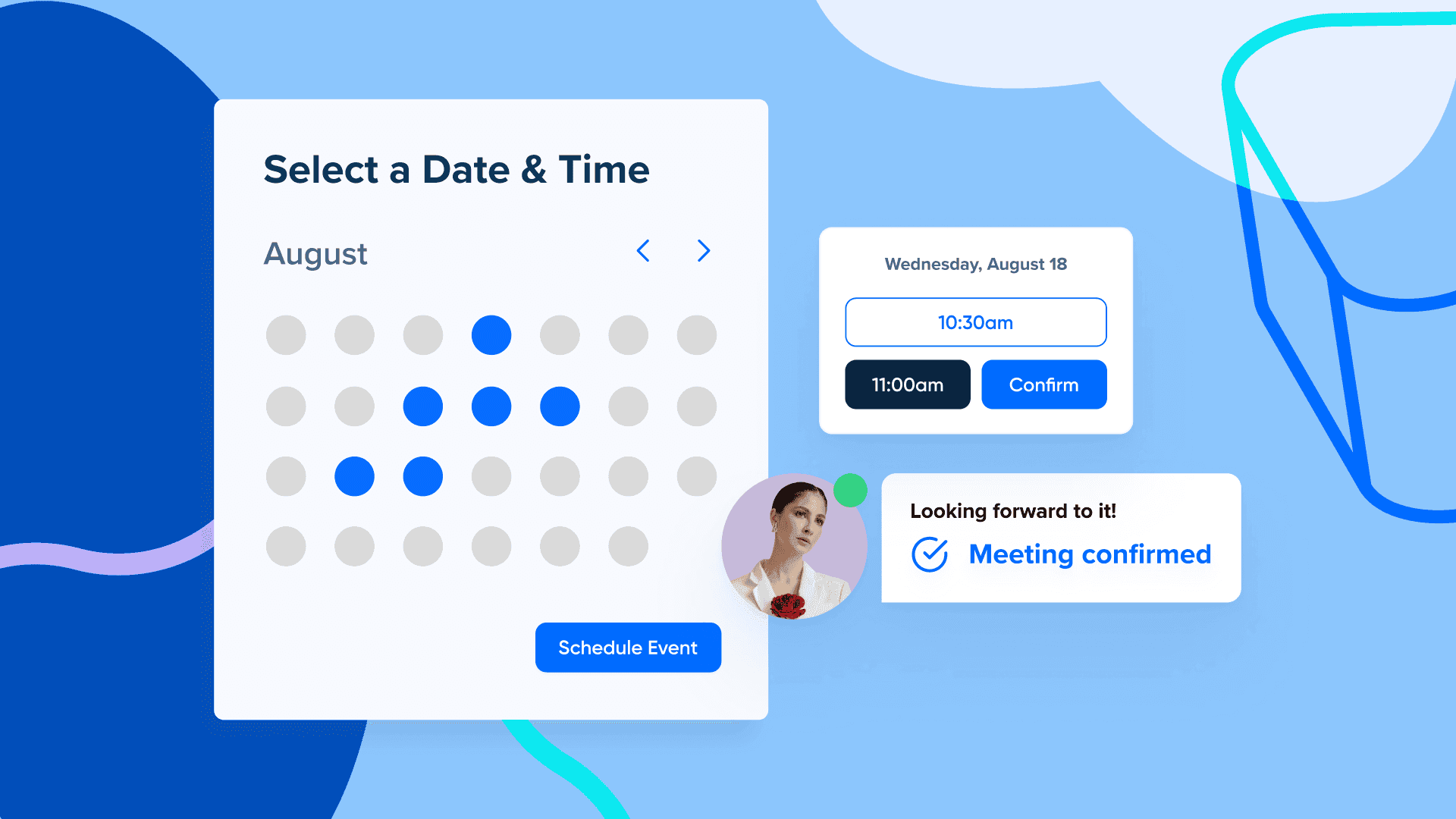
Scheduling is one of the most deceptively time-consuming parts of recruiting. Coordinating between candidates, managers, and time zones can take countless emails.
Calendly changed that for us.
Candidates choose the time that works best for them, and I avoid long coordination threads. It speeds up the process, improves the candidate experience, and gives our team a more organized, predictable workflow.
Why human judgment still leads the hiring process
Even with all these tools, the heart of recruiting remains human. No transcription, comparison, or automated suggestion replaces the experience of sitting across from a candidate, listening carefully, and understanding their motivations.
AI supports:
- structured thinking,
- better documentation,
- faster preparation,
- and reduced administrative work.
But the decision to move a candidate forward is still shaped by:
- emotional intelligence,
- contextual understanding,
- cultural awareness,
- and long-term potential.
That part cannot be automated. It lives in the conversation, the follow-up questions, the stories candidates share, and the intuition developed after hundreds of interviews.

In our team, AI sharpens the process, but judgment guides it. The technology elevates consistency and efficiency, while people bring the depth and interpretation required for great hiring.
What’s next: the future of AI in talent acquisition at Making Sense
What we’re experiencing inside TA is just the beginning.
I already see several emerging opportunities:
- richer insights into communication patterns,
- predictive analytics for time-to-fill or potential performance,
- AI copilots directly embedded into ATS workflows,
- and far more personalized candidate experiences.
And as with every other team at Making Sense, our approach will be the same, pilot early, measure impact quickly, and scale only what drives real value for people.
What we learn internally eventually shapes how we help mid-market and private-equity-backed companies modernize their operations. Innovation at Making Sense moves from the inside out.
Conclusion
AI is transforming the way I work as a Talent Attraction Lead. It eliminates manual work, improves consistency, and gives me space to focus on what truly defines great hiring, meaningful human interaction.
The future of recruiting will be shaped by the partnership between people and technology. Teams that adopt AI thoughtfully will create better experiences, stronger evaluations, and more scalable processes.
At Making Sense, this evolution reflects who we are as a company. We test, learn, and operationalize innovation internally before bringing those insights to the organizations we partner with.
Talent Attraction is just one chapter in that story. And we’re only getting started.
Nov 19, 2025