

What Is MCP and Why It Matters for Enterprise AI Integration
Most enterprise AI projects stall not because of the model, but because of what surrounds it. MCP is starting to change that equation.

May 14, 2026
For most companies experimenting with AI, the first challenge was choosing a model (GPT, Claude, Gemini, etc). Now the challenge is connecting that model to the rest of the business.
As organizations move beyond isolated copilots and chat interfaces, the expectations placed on AI systems are changing. Early experiments could work with prompts, static documents, or limited context. But once companies try to apply AI to real business processes, those systems need access to information distributed across the organization in real time.
That means connecting with CRMs, ERPs, internal documentation, workflow tools, and operational platforms, while adapting to the permissions, business rules, and constraints of each environment.
That shift is exposing a persistent architectural problem: every integration tends to become custom infrastructure. Teams rebuild similar connectors across projects. Maintenance overhead compounds. And AI systems that performed well in demos begin to break down when they meet the actual complexity of production environments.
MCP, short for Model Context Protocol, is an emerging open-source standard designed to help AI systems connect more consistently with external tools, data sources, and business applications.
The protocol was introduced by Anthropic in late 2024 to address a practical problem: AI systems need a consistent way to access the information, tools, and actions required to operate inside real business environments. The idea is easier to understand through an analogy:APIs standardized how software applications communicate with each other; MCP points toward a similar idea for AI, creating a more reusable way for models to interact with tools, workflows, and operational data.
That may sound like a technical detail, but it becomes critical once AI moves into production. At that stage, what matters is not the model, but whether the architecture around it can support AI reliably across real operations, without turning every implementation into a custom integration project.
Why AI integrations become difficult at scale
Early enterprise AI projects were usually self-contained. A company might deploy an internal chatbot connected to a knowledge base, or experiment with a copilot that helped support teams draft responses faster. The surrounding architecture was manageable because the interaction surface remained narrow.
As we explored recently in our article on structured AI workflows, that changes quickly once AI systems start operating against real business processes. In legal environments, for example, AI systems may need to retrieve documents, classify information, validate metadata, and coordinate review processes across multiple platforms simultaneously.
The model is only one piece inside a much larger operational process. In practice, many organizations discover that integration work grows faster than the AI initiative itself. Every assistant, workflow, or agent often introduces another layer of custom connectors, retrieval logic, authentication rules, and orchestration behavior. Maintaining those integrations becomes difficult when APIs evolve, schemas change, permissions vary between departments, or critical business logic lives inside spreadsheets and undocumented processes accumulated over years.

This is especially common in mid-market companies where infrastructure has evolved organically through acquisitions, legacy systems, and departmental tooling decisions. Over time, that evolution leaves behind fragmented data structures, uneven system logic, and integration gaps that become difficult for AI systems to navigate. Customer records may appear differently across platforms, ERP data is often incomplete or inconsistent, and internal APIs can behave unpredictably depending on the workflow consuming them.
Over time, those inconsistencies create slower AI deployments, duplicated integration work, fragile automations, and unreliable outputs across workflows.
As AI systems become more embedded into operational processes, the infrastructure surrounding them starts affecting how reliably those systems scale, how quickly teams can deploy changes, and how difficult the environment becomes to maintain over time.
Why MCP is getting attention now
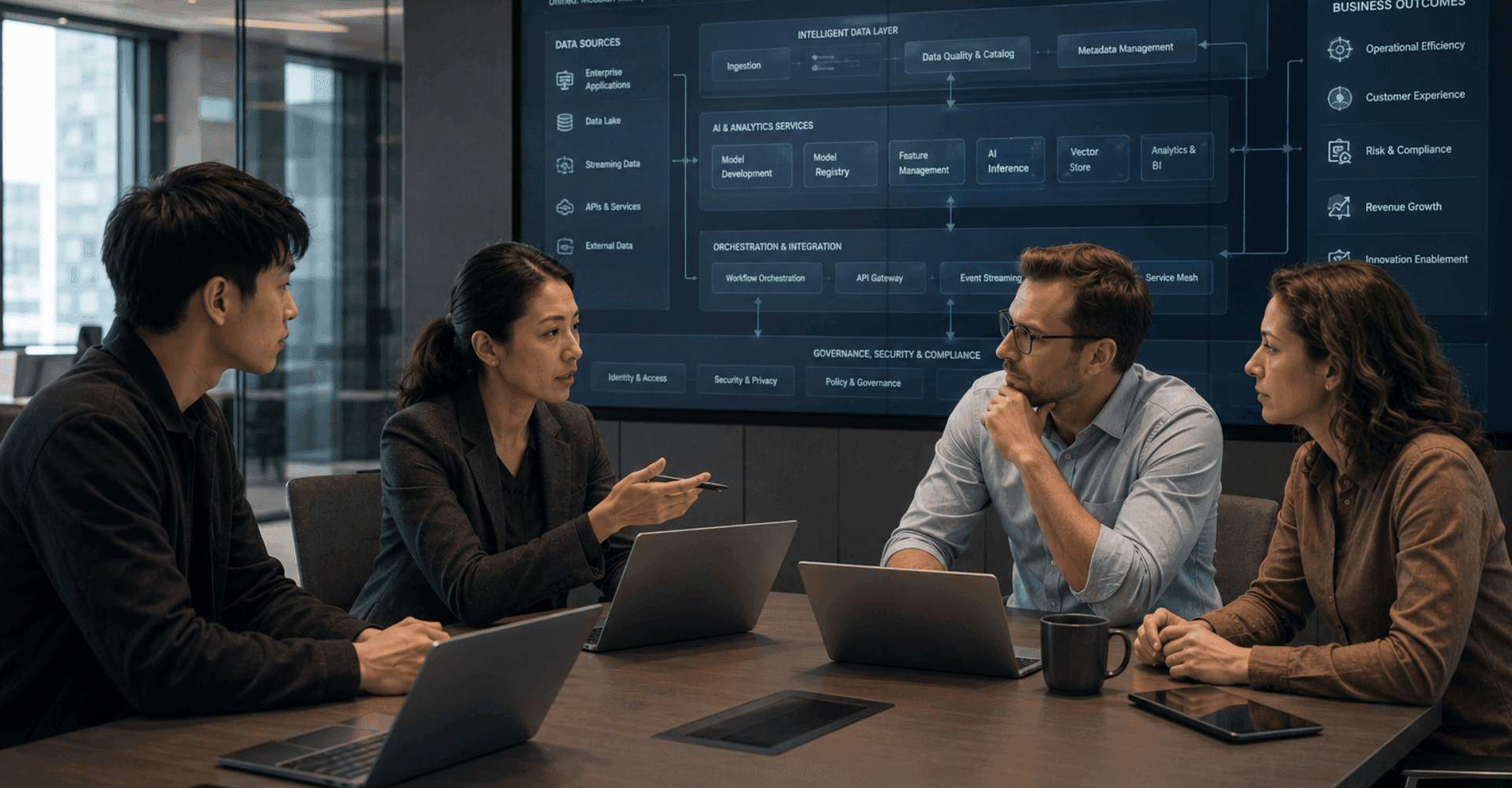
Model Context Protocol is getting attention now because enterprise AI is entering a different stage. What started as isolated chat experiences is moving toward more agentic and operational systems, increasing the need for architectures that can support interoperability across tools, models, and business platforms more reliably.
At the same time, enterprise environments are becoming multi-model. Organizations are already experimenting with combinations of OpenAI, Anthropic, Google Gemini, open-source models, and local deployments, depending on privacy requirements, latency constraints, governance policies, and cost. That environment makes deeply customized, provider-specific integrations harder to maintain over time.
Enterprise infrastructure typically evolves much more slowly than the AI ecosystem surrounding it. Most organizations cannot afford to rebuild the connection layer between AI and their business systems every time a new model or orchestration framework emerges.
This becomes especially visible in companies modernizing legacy environments or integrating multiple business units after acquisitions. The pressure toward more interoperable architectures is coming from both directions: AI is moving fast, and operational systems are built to stay.
What MCP could realistically improve
MCP is still early, and the ecosystem around it will likely evolve significantly. But the direction itself highlights three operational problems companies are actively trying to solve:
1- Duplicated integration work
Today, many AI integrations are built independently for each workflow, assistant, or internal tool. A more standardized interaction layer could reduce some of that duplication, making integrations more reusable across projects, especially in organizations running multiple AI initiatives at once. For example, the same connection to a CRM or document repository could be reused across support assistants, internal copilots, and workflow automation systems instead of being rebuilt independently each time.

2- Flexibility across models and providers
Most organizations cannot commit permanently to a single AI provider. Capabilities change, pricing evolves, and governance requirements vary. Protocols like MCP point toward looser coupling between operational systems and AI providers, which reduces long-term lock-in risk and makes it easier to swap or combine models without rewriting the surrounding infrastructure.
3- Operational setup overhead
Teams spend significant time configuring connectors, validating permissions, handling authentication, and maintaining orchestration logic before workflows can reliably reach production. Part of that overhead can be reduced when repeated connection work is turned into shared infrastructure: standardized connectors, schemas, permission rules, and tool definitions that multiple AI workflows can use instead of rebuilding the same access logic for every use case. This allows teams to focus on whether a workflow actually delivers business value rather than whether it can connect to the right systems at all.
We frequently see this in AI enablement initiatives where the challenge is less about model access and more about operationalizing workflows reliably enough to generate measurable impact. Getting from a working demo to a production-ready system often takes far longer than expected because real value depends on how well the model is connected to the business environment around it. That is where reusable integration patterns, governance, reliability, and operational design become essential.
What MCP does not solve
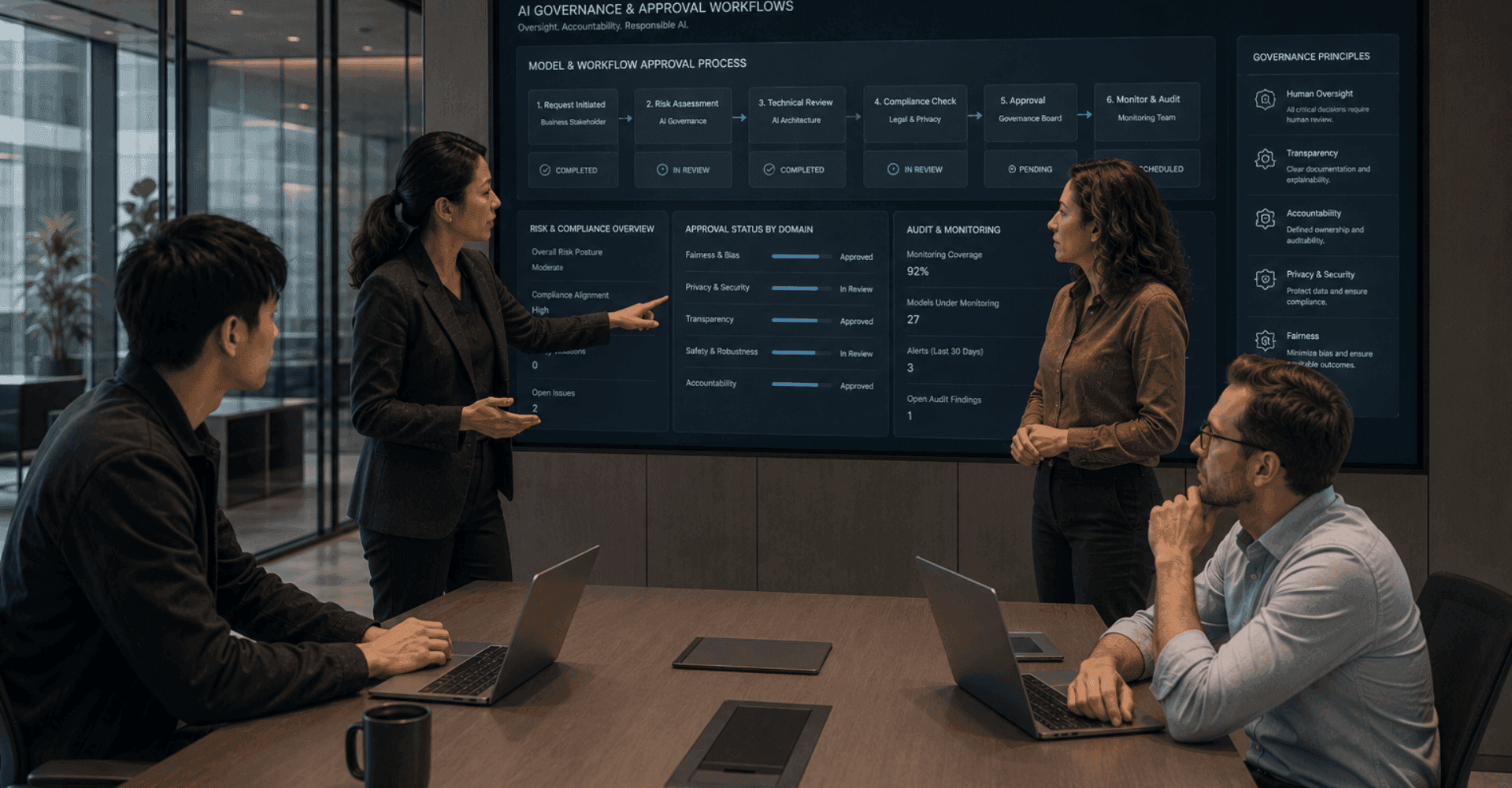
A protocol alone does not automatically fix fragmented ownership, inconsistent business rules, poor data quality, or weak governance. Operational AI still requires observability, auditability, permission management, reliable escalation paths, and human-in-the-loop controls, particularly in industries where decisions carry legal, financial, or compliance consequences.
Successful enterprise AI systems usually combine automation with carefully designed checkpoints rather than attempting to remove human involvement entirely. Model Context Protocol may simplify how AI systems interact with enterprise infrastructure, but the architecture and governance around those systems still need to be designed deliberately. Standardizing the connection layer is useful, but it does not replace the work of building something reliable.
This is especially relevant in regulated industries like healthcare and fintech, where operational decisions carry real consequences and governance structures need to be built in from the start instead of being retrofitted later.
What mid-market companies should focus on now
Most companies do not need to make Model Context Protocol an immediate infrastructure priority. The protocol is still developing, and the ecosystem around it is still taking shape. But it does point to a broader reality that is already becoming clear: AI will be much easier to scale in companies with cleaner integrations, more consistent data, and stronger operational governance.
For mid-market organizations, the most valuable preparation is usually not adopting a specific protocol today. It is creating the operational foundations AI systems depend on to work reliably at scale. That means:
- Making core systems API-accessible, so AI can reach them without custom workarounds each time
- Clarifying critical workflows before automating them, including process owners, handoffs, exception handling, approval rules, and escalation paths. AI systems are much easier to scale when the process they support is already visible, structured, and understood
- Improving data consistency across platforms, particularly where records are duplicated or incomplete
- Modernizing the legacy bottlenecks that block integration, a process covered in more detail in our work on legacy system modernization
- Establishing governance and human-in-the-loop processes early, before AI systems are deeply embedded in operational workflows
Companies already struggling with disconnected systems will likely encounter those integration and scalability issues first as AI initiatives expand beyond isolated pilots.
The organizations that scale AI most effectively over the next few years will likely be the ones that invest early in building environments where AI systems can connect reliably with business operations, adapt as technologies evolve, and scale without introducing unnecessary operational complexity.
Exploring how AI systems can integrate more reliably across your existing platforms, workflows, and operational infrastructure? At Making Sense, we help organizations design AI systems that integrate reliably into real operational environments, combining workflow automation, modern integration architecture, and human-in-the-loop operational design for production-ready AI initiatives.
Schedule a meeting to discuss how your organization can prepare its systems, workflows, and architecture for scalable AI adoption.
May 14, 2026