
Why Atlanta Is Having the Most Honest AI Conversation in America Right Now
Atlanta is becoming a serious node in the U.S. AI conversation, and the discussions happening there are more grounded, more operational, and more honest than most of what you'll find at the big national conferences.

Apr 24, 2026
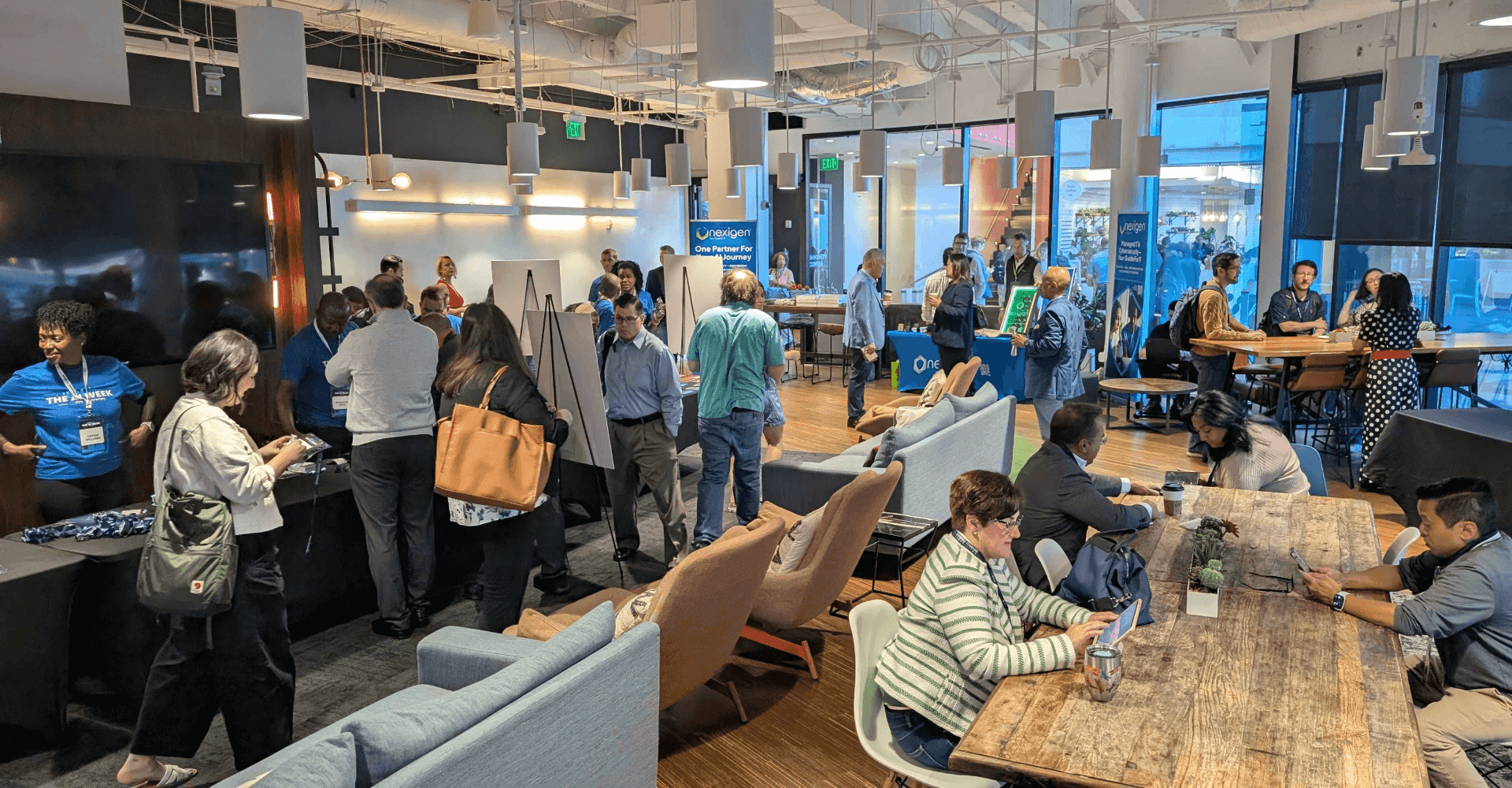
I went to Atlanta AI Week with Hernan Fino, our Head of Innovation at Making Sense, already knowing what kind of event it would be. Low hype, high signal. A three-day conference at Atlanta Tech Village designed for people actually building and deploying AI. What I didn't expect was how much the conversations there would validate, sharpen, and in some cases challenge what we've been seeing with our own clients.
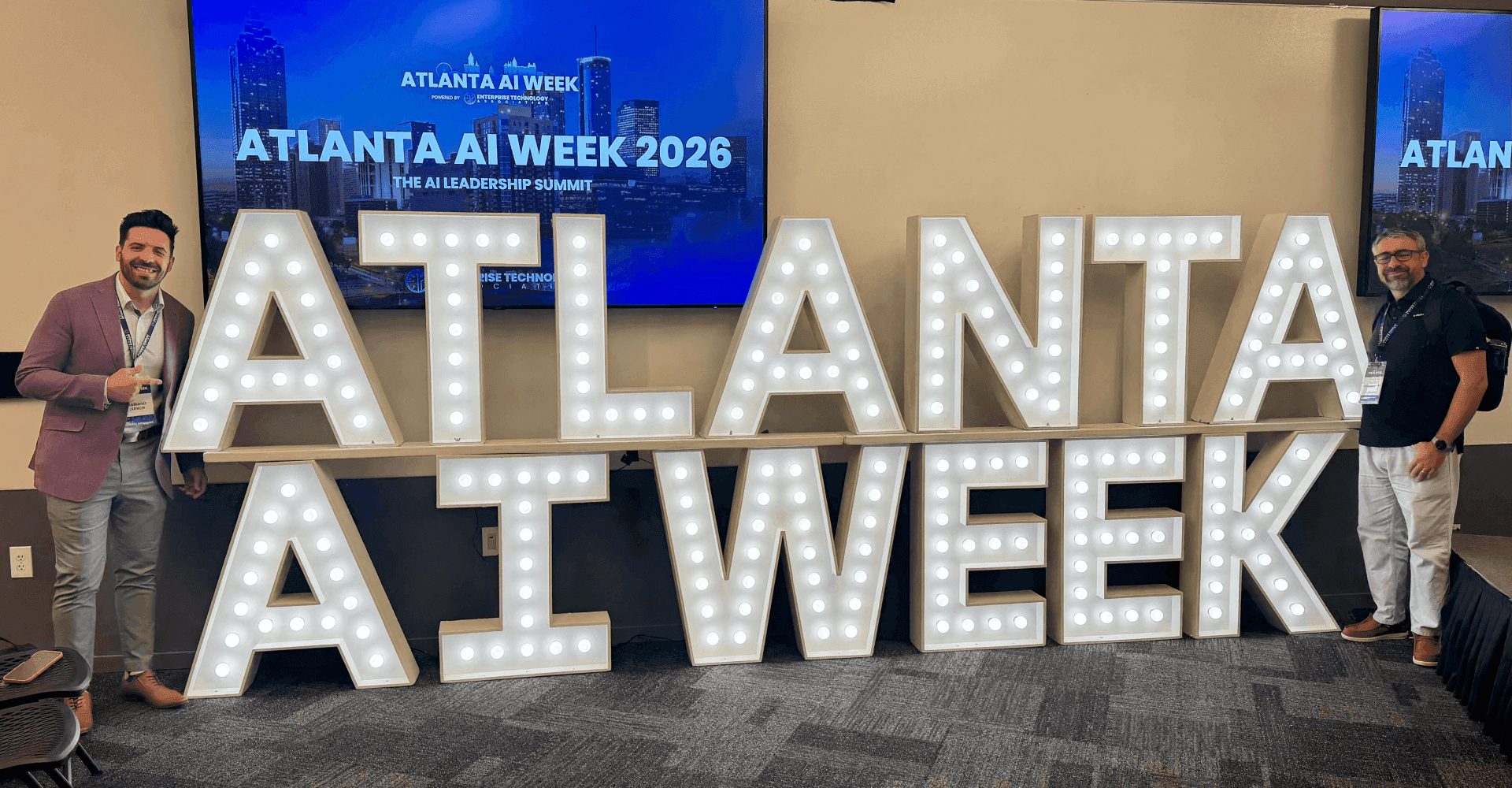
We came back with different notes, as you'd expect from someone focused on architecture and systems versus someone who spends most of his time talking to business leaders about where AI fits in their growth strategy. But the themes ran parallel in ways that felt significant, and that parallel is what I want to write about here.
Atlanta is quietly becoming a serious AI city
There's a reason the AI Week series chose Atlanta to open the 2026 calendar. The city has built a dense technology ecosystem over the past decade, anchored by Delta, Coca-Cola, NCR Voyix, and a growing base of high-growth startups. It increasingly attracts the kind of business-minded AI conversations you'd previously only find on the coasts.
The speaker roster made that concrete: Georgia state senators discussing legislation already moving through state channels, the Chief AI Officer of the State of Georgia, operations leaders from Delta and Cintas, enterprise teams from AWS and Microsoft, and local founders, investors, and practitioners working in verticals like legal, healthcare, and security. A genuinely cross-functional room, and one that was clearly past the "How should we do AI?" conversation.
The discussions were about access controls, SOW language, governance ownership, and what happens when your automation fails. Atlanta is well into the next chapter.
The idea that kept surfacing: AI executes, humans decide
If one sentence captured the spirit across the content days, it was this: AI executes, humans lead and decide. I've heard versions of it before, but in Atlanta it carried more weight because it was coming from people who had already learned it the hard way.
Hernan and I talked about this at length between sessions. His read on it was characteristically precise. "The core issue," he told me, "is the gap between what the model does and what the organization is responsible for. LLMs are predictive engines. They follow instructions and don't exercise judgment in any meaningful sense. And the blindspots they have aren't always visible, even when the system is working correctly." What he meant, and what I've seen play out with clients, is that a model can be functioning exactly as designed and still produce an output that's wrong in context, non-compliant, or organizationally inappropriate.
From where I sit, the business translation is this: most companies I talk to are still treating human oversight as a layer you add when things go wrong. The teams that are further along have done something different: they built the human decision point into the architecture first, then designed the AI layer around it. That inversion is what separates a system that holds up from one that quietly drifts off course.
When human-in-the-loop (HITL) is an afterthought, you get review processes that are too slow, inconsistent, or quietly skipped by teams under deadline pressure. Approvals stall. Exceptions pile up. The person supposed to catch errors doesn't have enough context to know what they're looking at. When HITL is a design principle, decisions become traceable and the organization retains genuine accountability for what the system produces.
HITL is an architectural decision, not a compliance checkbox
Hernan and I spent a good chunk of our Atlanta conversations on this, and I keep coming back to it because I think it's where most implementations quietly fail. His framing was precise: "Human-in-the-loop isn't a feature you add to an existing workflow. It's a structural decision, with direct implications for interface design, data flows, decision documentation, and how you handle exceptions when the model reaches the edge of its competence."
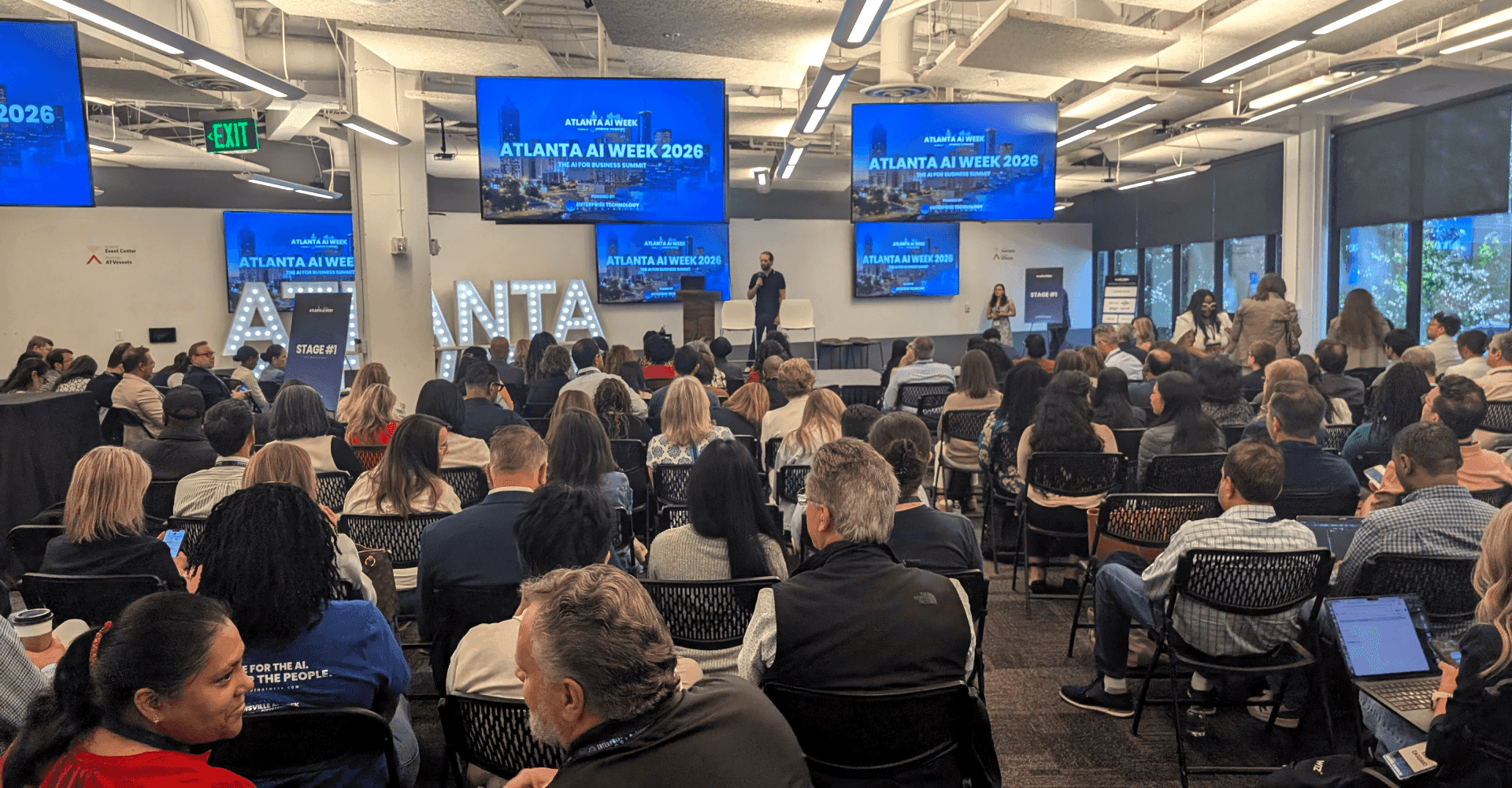
Several Atlanta speakers pushed on this with real force, particularly in the AI Adoption and Executive Governance tracks.
A model trained on historical data encodes the assumptions embedded in that data, including the wrong ones. It operates confidently within its training distribution and has no mechanism to flag when a situation falls outside it. Human judgment is contextual and emotional in ways that matter enormously for decisions with real consequences. That's a feature of good decision-making, not a flaw to route around.
"The human-computer interaction (HCI) piece is underrated," Hernan said. "Designing for HITL means designing for transparency and clarity. The person reviewing the AI's output needs to understand what the model is doing well enough to catch what it gets wrong. If the interface doesn't support that, you've built a system that looks supervised but functionally isn't."
A practical design principle that came up across multiple sessions: interfaces built to guide users in feeding the model the right input, rather than leaving the interaction open-ended, have meaningful downstream effects on output quality, cost, and whether human oversight is actually happening or just nominally in place.
This connects to something repeated across both content days: process first, tools second, automation third. AI replicates workflows rather than reimagining them, usually faster and at greater scale. The curiosity required to ask why a process works the way it does, and whether it should, is a human capacity. Hernan has explored this in his writing on decision friction and workflow exceptions, and let me say that what I see from the client side confirms it: the most expensive drag is rarely the main workflow. It's the edge cases that require manual judgment, and AI deployed without that understanding accelerates the problem rather than solving it.
Governance is already urgent
The third day of Atlanta AI Week leaned heavily into governance, and the urgency caught me off guard. Georgia state legislators were in the room presenting on AI legislation moving through channels at the municipal and state level. Several of those conversations landed with real force: every layer of government is moving on this simultaneously, locally, at the state level, federally, and eventually internationally, and organizations that build governance structures today will be in a much stronger position when compliance becomes mandatory.
Honestly, what I kept hearing across those sessions was that governance needs one accountable owner. Committees matter for input and oversight, but somebody has to be the person whose job it is to keep the organization current. I mean someone who tracks what AI tools are being used, what data they're touching, and whether those tools are consistent with the company's obligations. Without that, you get policy documents that nobody updates and frameworks that don't survive contact with the tools people are actually using.
Shadow AI is where this gets concrete. MIT's NANDA initiative documented it in its 2025 GenAI Divide report: only 40% of companies have purchased official LLM subscriptions, and yet employees at more than 90% of those same organizations report using personal AI tools for work tasks. That's a wide gap, and inside it, data is moving through tools nobody approved and decisions are leaving no audit trail.
In Atlanta, people brought real examples into the room: employees using AI tools to surface information they had no business accessing, with zero malicious intent. Nobody had defined the boundaries, so the technology filled the void.
There's also a cost argument for moving on governance now, and it came up in the room more than once. According to the Stanford HAI 2025 AI Index Report, inference costs dropped over 280-fold between November 2022 and October 2024. Since then, that trajectory has continued: Epoch AI's research tracks price declines ranging from 9x to 900x per year depending on performance level, and GPT-4-level capabilities that cost $30 per million tokens in 2023 are now available for under $1. The catch, and Atlanta speakers were clear on this, is that lower per-token costs don't translate into lower overall AI spend. As usage scales and agentic workloads proliferate, total inference budgets keep climbing. The window to build governance infrastructure carefully, before the pressure builds, is now. In my view, doing it proactively is a fundamentally better exercise than doing it reactively, after an incident or a regulatory audit forces your hand.
For PE-backed companies, the stakes take on a different shape. If you've worked through what typically surfaces in the 12 to 18 months before a transaction, you know that governance gaps nobody documented have a way of becoming visible at the worst possible moment. Who owns AI decisions, how outputs are logged, what data the tools are touching: this is exactly the kind of implicit organizational knowledge that turns into a liability under diligence scrutiny.
What it actually costs to go it alone
One of the recurring practical themes across Atlanta AI Week was the cost of building AI capacity from scratch, and specifically, how much slower and more expensive that path tends to be without a partner who has already been through it.
The case isn't primarily about fees. Hiring in-house AI expertise takes time. Ramping someone into the specific context of your industry, your stack, and your regulatory environment takes longer. Training programs for existing teams are generally slow and frequently disconnected from the decisions the organization actually needs to make. Meanwhile, pilots run, budgets get consumed, and the organization produces learning that doesn't transfer.
From what I've seen working with companies at different stages of this, the ones moving fastest are the ones that brought in partners who already had the pattern recognition, who'd already worked through the failure modes in adjacent contexts, and who could calibrate between what's technically possible and what's actually worth building right now.
I've been making this case to clients for a while, and Atlanta sharpened it. The window to get this right affordably is open now. Companies that build the right partner relationships while the learning curve is fresh will be in a fundamentally different position two or three years from now than the ones still debating whether to hire an internal AI lead. That gap compounds.
For companies concerned about over-committing before the landscape settles, I understand the hesitation and have written about it directly: the pace of model releases doesn't have to mean constant reinvestment, provided you build in ways that hold value regardless of which model is on top next quarter. When I look at how we've structured our AI and Data Strategy work, starting with the business problem, mapping the process, and only then designing the AI integration, I think that sequencing is exactly why it holds up when the tooling changes. It's a different approach from firms that lead with the technology and retrofit the business case afterward.
What I'm taking back
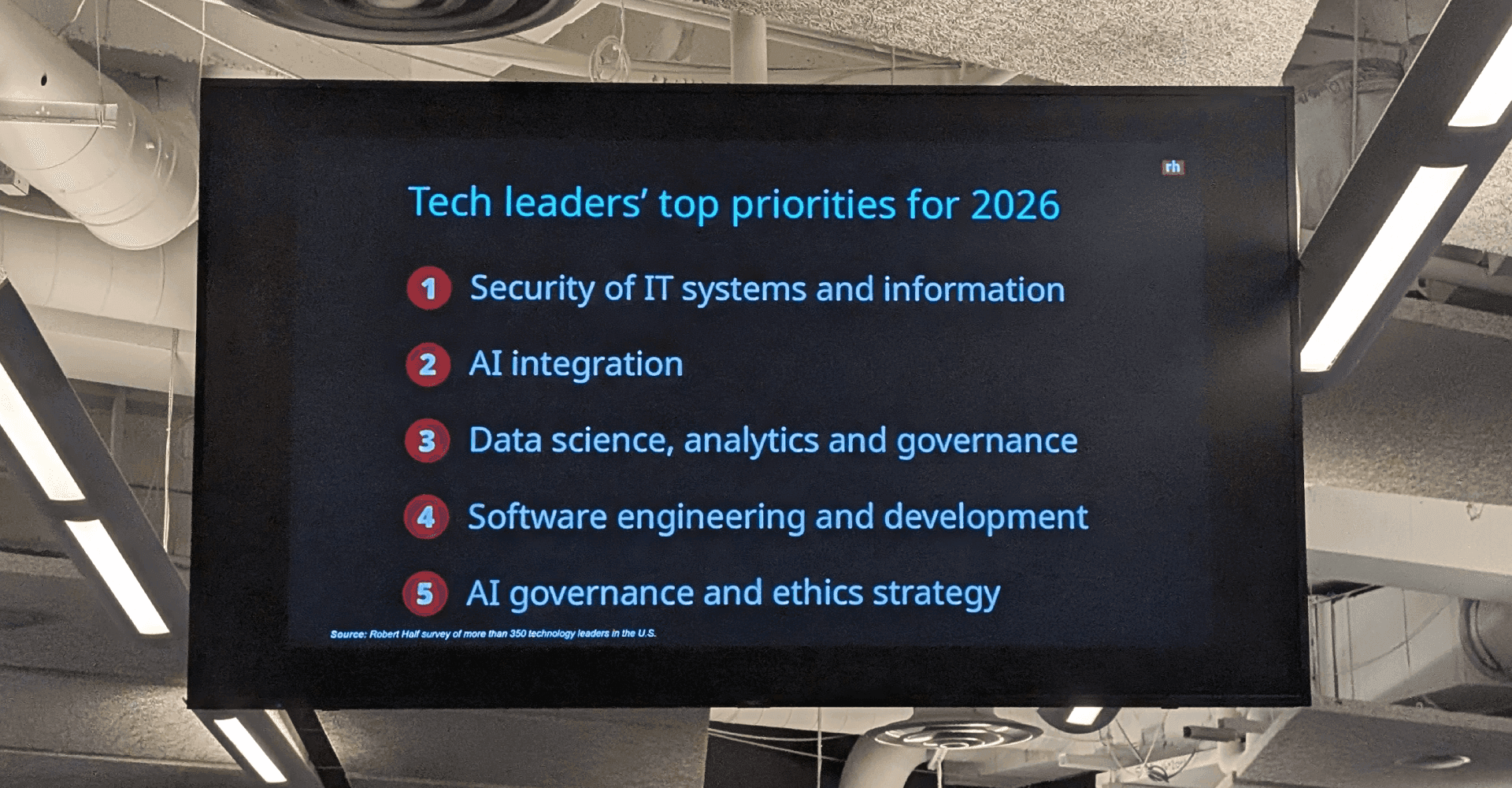
As a quick recap of the key takeaways from these three days in Atlanta:
- Governance ownership is the most underrated AI decision a company can make right now. Somebody needs to own it, with a name and accountability. A committee without a named owner is a policy that nobody enforces.
- HITL works when it's designed in from the start. If your AI workflow lacks explicit human decision points backed by interface support, that's worth addressing before you scale anything.
- Process clarity comes before automation. Ambiguity in a workflow doesn't disappear when you add AI. It surfaces faster, at larger scale, with fewer places to hide.
- The regulatory environment is already moving. Municipal, state, and federal AI legislation is in progress now. What you implement today will be governed by rules being written in parallel.
- The cost of building alone compounds. The learning gap is real, and the window to close it affordably is open right now.
On the flight back, Hernan said something that stuck with me: “Atlanta felt like AI coming off its pedestal”. And he's right. The Waymo cars navigating Atlanta traffic aren't a novelty to the people riding in them anymore. The Georgia senators weren't there to marvel at the technology; they were drafting legislation to govern it. People in that room were using AI, arguing about it, designing systems around it, and working out who's accountable when it goes wrong. That normalization is where the serious work begins, and it's the conversation I find most valuable to be part of.
If your organization is working through what a grounded AI strategy looks like in practice, I'd be glad to talk.
Mariano Jurich is a Senior Product Manager at Making Sense focused on business development. Hernan Fino is Head of Innovation. Both attended Atlanta AI Week 2026 in Atlanta, April 20-22.
Apr 24, 2026